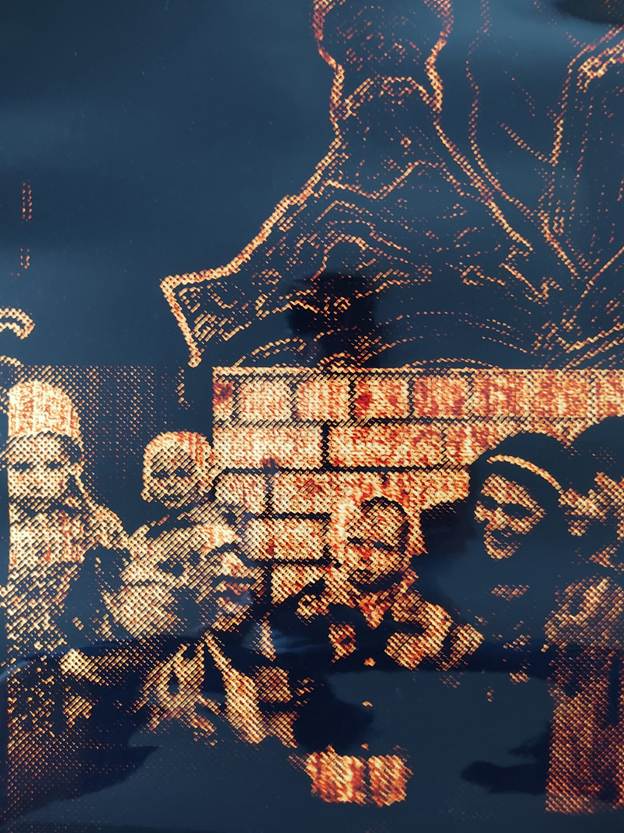
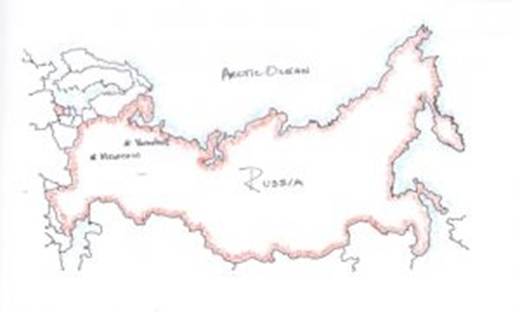
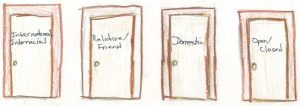
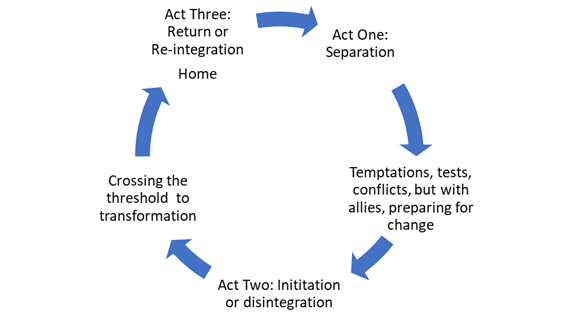
Of course, fireworks were exploding. Just not in celebration of a birthing bathed in mothering hormones. It was becoming a family by adoption, exploding with happiness hormones.
I end Bonding/Attachment suggesting that while writers I have read may use the words ‘bonding’ and ‘attachment’ somewhat interchangeably, I may as well stick with the one that sounds like a boat anchor rather than fireworks and happiness. Clunky or not, ‘attachment’ is the broad term that covers becoming a family whether via a birthing or by adoption. And both modes of becoming family can be celebrations. Bits of twigs, moss, plant fluff, lichen and spider silk caught and carried by a little hummingbird to build a nest must be a joy to find. Children no longer in the care of biological parents may be a joy to find for adopters’ nest building.
Ok, Attachment it is
Attachment as a concept is most often associated with John Bowlby. His findings focus on a “child’s tendency ‘to seek proximity to and contact with a specific figure’ when afraid, sick, or tired….”[i] an inborn desire to seek closeness to protective adults. That takes care of what the child sees attachment to be.
And adults? What does the term mean for them? “’More broadly speaking, attachment may be defined as ‘lasting psychological connectedness between human beings’”. Jean Mercer settles on defining attachment as “emotional ties” and “beliefs and ways of thinking about relationships” to form an “internal working model of emotion and social relationships”[ii].
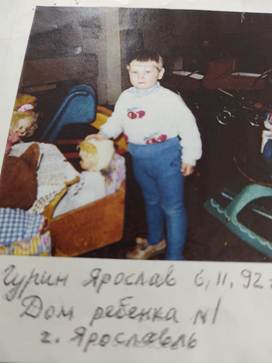
We had signed a file full of documents and in less than 24 hours would stand before a judge and upon the drop of her gavel, we would be a family. Yasik had been told after we left that first afternoon that he now had a mama and papa. What meaning did he attach to those words?
That evening he gave away the toys we brought for him. In celebration or because he had been nurtured in the orphanage setting to share? Had Yasik already been learning empathic social relationships in a place not usually known to encourage healthy social relationships? Was the orphanage actually a caring, vibrant social network, a good environment for the nurturing of empathy and attachment?[iii]
Attachment: preparation
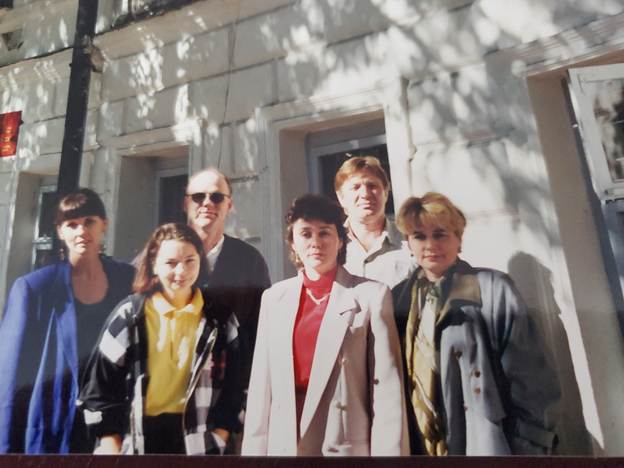
After that sweet little smile through the banister, we returned to the hotel to have supper with Alexi, the driver, Tanya the facilitator and the translator, Elvira, realizing that while they were shy about speaking English and therefore appeared to ignore us, they were actually very kind, thoughtful and helpful. Putting all the parts of completing an adoption: the paperwork, arranging our flights, housing and Moscow interpreters, as well as organizing the court appearance, made one adoption a large operation.
At the meal Elvira gave us a heads up that Dave would be expected to give a little speech about how we felt about this opportunity to adopt Yasik and to request that our paper work be expedited. We also learned we would likely be in Moscow longer than we had initially understood to complete Yasik’s paper work. More time to play tourist and shed dollars, but perhaps also to help ease Yasik into family.
Attachment: appearance and interests
The three sharing this meal with us also noted that Yasik looked a fair bit like Dave and shared his interests in vehicles, music and art. Nice. I was later assured Yasik had eyes the same colour as mine. It is worth wondering about: this interest we have in family looking like us or fitting the proverbial ‘like father, like son’. I have wondered about the need to find resemblance to family as a kind of reassurance of our personal identity. Yet it took only a picture emailed to us of Yasik’s biological siblings to determine they were indeed his siblings. For those who do not share similarities with their adoptive families this is often a primary issue in their search for personal identity. “As Swedish as Anybody Else’ or ‘Swedish, but Also Something Else’?” speaks to this issue for the non-causasian adoptee, nicely encapsulated in the title.[iv]
Attachment: the honeymoon begins
After a stroll alongside the Volga, we went to bed. Well, actually after Dave prepared what he understood he was expected to say in court. That done, we flopped onto our separate single beds, maybe a bit high and free to daydream. Yasik was almost ours and he was more than we had hoped for. The journal also notes that we each took a Sudafed tablet. Did the Sudafed stimulate that daydreamy feeling? Or was this a peek at what the early days of attachment/honeymoon period feels like? A kind of falling in love.
Attachment: the legalities
Adoption day was a beautiful early fall day, August 19, 1997. We were driven directly to the court for the region of Yaroslavl. The marble steps up to the court were worn to uneven dips. A very old building. Dave was still muttering the phrases he needed to say; Elvira, the translator, was building up to a nervousness I wondered at but did not understand. This may have been a building that spoke power to Elvira but it lacked the power to gain a fearful respect from naïve tourists. We would more likely have picked up Elvira’s vibe had it been a Canadian court. A traffic jam had delayed proceedings, the prosecutor looked bored, most in the room were women. When the judge was heralded and appeared, she was hardly more substantial than the wizard of Oz behind the curtain. Still… she managed to feed Elvira’s fears and spook Dave and I somewhat when Elvira relayed to us that the she had been admonished to tell the truth or be prosecuted.
Dave was called first. He was asked how long we had been married, what our jobs were, after which he recited his memorized speech to request an early dispatch of paperwork. The judge smiled at his earnest tension. I stood next to give my name and affirm I was a Canadian. I sat back down and Dave was asked to rise again. “If you both work,” the judge asked, “how do you plan to care for Yasik?” Dave told her we had a plan to reorganize his classes and that between our schedules, Yasik would never be left alone. And other than one afternoon when we left him at the after-school care which did not please him, he was always with one or the other of us, or with extended family or friends. Although I am sure the question is part of the suggested adoption interview questions, there is a bit of irony in this young judge’s question. It was being asked by someone whose cultural attitude to adoption leans toward dropping off children at an orphanage while parents deal with other life stresses, a trend particularly encouraged in the Soviet period.
Dave sat down and I was asked to pop up again. The judge asked what we thought of Yasik. I choked and only managed to respond with “Wonderful”. Elvira misted over and Dave caught a smile on the judge’s face. There may be vitriol at the highest political levels over adoptions but person to person, however much suspicion has been whispered in our ears, we found Russian people are as human as any Canadian — a little ‘duh’ here. Too often, unquestioningly we do drink the Kool-Aid because somewhere in our psyche we have the impression that Russians are not too be trusted nor respected as we might our own good people, something to be further tested by current political tensions.
The judge turned from us, giving the floor to the prosecution and defense who each offered their conclusion that all appeared in order to them. Writing this now I wonder who procured the defense. I remember no discussion about the need for a lawyer, again a nod to the detail involved in a single adoption. The judge rose just as he or she would do in a Canadian court, telling all that she would consider her decision and left for a few minutes. My journal says that Tanya was passing out chocolates and flowers while we waited on the judge’s deliberations. The judge returned and declared that we were Yasik’s parents. The first seal on our adoption. Tanya and Elvira hugged and kissed us, wishing us “Good Luck”.
Attachment: assumes some detachments
There were still details, details, details. One detail that was given absolutely no thought by either Dave or I in our naïve happiness concerned the question of the legal status of parental rights belonging to Yasik’s bio parents. No one denied that Yasik’s bio parents were still among the living. Yasik was in the orphanage under the designation ‘social orphan’, someone who has at least one living bio parent. Had his bio parents actually given up their rights as I wonder in The Adoption Procedure in 90s Russia?
We were told, at the time, that Yasik’s mom didn’t come back to the hospital after a visit or two so the government took over guardianship. For many years I tried to assure Yasik that her visits suggested she did care for him and placed him in government care because it was best for him, a narrative that works for adopters. In his teens, Yasik he let me know he didn’t buy that story. Only after connecting with Yasik’s bio sister in 2020 did we learn that Yasik’s bio mother, Gurina, went to the hospital to try to get social services money for Yasik which she was denied so she quit on him.
August 19, 1997 we only knew that Gurina ‘moved around a lot’. Our legal standing in adoption was based solely on the Family Code of the Russian Federation, signed by Boris Yelstsin in 1995. All that applied to Yasik was one line, the final point in Article 130 of the Family Code, “for reason recognized by a court as not live with the child and shirk duties involved in his/her upbringing and maintenance, for over six months”.
At least this verifies that the adoption was legal. Small comfort, for it was affirmed by what is actually quite tenuous: he had not been in his bio parents care for ‘over six months’. In his case it was now 3 years since he had been in his bio parents’ care. On that final point in Article 130, Yasik, that young judge proclaimed, was our son from now on. On that line alone, a child’s life was irrevocably changed, an attachment secured, an attachment dissolved.
Recently Dave and Yasik, now an adult, were talking about his adoption. He understands that at the time he was four years old and in government care. He knows his bio-parents had left him in care, yet he said, “I wish I’d had a chance to have a say in the adoption.” I don’t yet know what input he might have wanted in the proceedings, but I sensed his lack of control over his own life. Yes, in a real sense that is the nature of becoming part of any family, but there is a difference between being born into a family and having adults in a court proceeding making the choice for the child. Adoption Unfiltered: revelations from adoptees, birth parents, adoptive parents, and alliesspeaks to this: “It can be alarming knowing that we have little to no control over our lives. After all, from the moment of relinquishment, others have been “playing God”, making decisions over which family we’re placed in, and determining our futures in ways that differ from those who aren’t adopted”[v].
Attachment: based on court findings
The conditions of Article 130 were laid out in a paper shared with us by Yasik’s bio sister and her family. Gurina actually came to visit Yasik at the hospital to seek money designated for his care. She stopped coming to visit her youngest son when she was denied this money. A year after we adopted Yasik, the Gurins made an attempt to gain access to money for her children’s care through the court. Following is a summary of a copy of the actual court documents of this couple’s complaint before the court:
March 11, 1998 re: the case brought by Gurina L V (age 28) and Gurin NG (age 36) for depriving them of parental rights and exacting alimony for the children’s maintenance.
The court findings:
Gurina is a single mother of the two older children. She married and has two children with Gurin. At the time of this court hearing the girl born in 1991 was still living with the Gurins. The other three had been placed in care. The report says, “The son Yaroslav was adopted without his parents’ consent due to Article 130 of the Family Code of the Russian Federation.” The response to the Gurins’ complaint was to detail “the parent’s neglect their children, do not care for their lives, do not support them”. Yasik had been taken to the town hospital “due to social reasons”. The Gurins “have deprived themselves of the parental rights”. “The son Gurin Yaroslav was adopted without the parents’ consent as they [Gurins] refused to take him home from the hospital”. Yet Gurina continued to ask for financial support after which she said she would care for her children. Their argument was lack of money though a court investigation found that the Gurins worked at a factory which paid them in food and china to sell for money. To sell the china they needed to travel past the care homes three of their children were in. Not once did they stop to check in on their children.
I Love Russia: reporting from a lost country speaks to why the Gurins may have been working at a factory which paid them in food and china to sell for money.
In the 1990s, during the era of privatization and economic reforms, enterprises stopped paying employees their salaries, systematically, on a massive scale. In 1996, 49.3 percent of workers in Central Russia weren’t paid – elsewhere, this number went up to 69 percent. At the same time, there was catastrophic inflation. Just in 1992, prices increased by a factor of twenty-six[vi]. Yasik was born in 1992 and entered the orphanage about two years later.
A sister of Gurina’s testified to the Gurins lack of care for their children. Because the couple could give “no good reason’ for their lack of care the court hearing recommended that the parents be deprived of their parental rights and be ordered to hand over a portion of their wages to the children’s care until the children came of age…. According to articles 69, 81, 84 of the Family Code of Russia, articles 191 – 197 HAS DECIDED: satisfy the claim by the Education and Youth Affairs Department. Deprive Gurina LV of the parental rights to [both her and their] minor children…. the children should be placed under the care of Guardianship and Care body”. The Gurins were given the option to appeal in 10 days.
In the short time that Yasik was in the care of his parents, he was found alone in bed un-cared for to the point that social services got involved. It is safe to assume Yasik experienced little of what Julie Holland, MD, brings forward as the way to building resilience in a child: being engaged in loving response to the child’s physical and emotional needs and desires[vii]. More on this in coming posts.
Unattachment: the costs
Adoption Unfiltered: revelations from adoptees, birth parents, adoptive parents, and allies also reminds adopters that when the world at large slaps us on the back, telling us how amazing we are for adopting a little waif, we need remember that resume building for sainthood is also a rap sheet for the sins of the first parents, as “flawed and unworthy“. The child becomes a “lucky-adoptee” and the parents with whom the child will always carry some connection, are endlessly brought to mind with a whiff of lessness. “This causes a split in the [adoptees] hearts and minds that’s very painful.”[viii]
We must, therefore, temper judgement of Gurina’s asking for financial support to care for Yasik as a condition for taking him home; she may have been in the same difficulty many Russians were in at the time, a mother overwhelmed. Everywhere in the world there are stories of mothers relinquishing their children when they cannot support them. In Russia, however, putting a child in care during a time of difficulty is not regarded with quite the degree of negativity that it carries in many other cultures.
As we exited the court house after our hearing, a radio interviewer waiting outside approached us to ask, via Elvira, what we thought of our experience, what we planned to do and why had we chosen to adopt in Russia. She asked us if Yasik would know about Russia. Since reading about how to help a transnational adoption go more smoothly for the child and about the Magnitsky Law and the Canadian counterpart, Justice for Victims of Corrupt Foreign Officials Act, the question about retaining ties to Russia carries more weight. At the time we probably responded with only vague assurances and little understanding of our new child’s need for support as he began to discard one concept of himself, his language and culture, to build a new one.
We drove with our team or should I say darted about ‘as the crow flies’ on dirt back roads to stand by as Tanya saw to the signing out of Yasik’s life in Russia: the passport office, adoption center, and …? Sometimes we were asked for our signature, more often Dave’s, because it was written on everything that ‘the boy is traveling with his father’.
Between stops and while waiting for business to be completed, we talked with Elvira; her English was very strong. We compared teaching experiences, the biggest difference being that she was not merely the teacher but also her classroom’s maintenance person. She fixed her own roof. At noon we returned to the hotel for lunch. We talked Perestroika and President Yeltsin’s attempted coup, the dissolution of the USSR, the gulag and the New Russia. No, of course we didn’t. Dave and I could only listen and become increasingly aware of how little we knew of the world our son had been part of for almost 5 years, five potent years as far as his own development was concerned. How Russian was/is he? And how deeply will all these components that make him Yasik impact all that he is and will be throughout his life?
There were more destinations after lunch for even more signatures and paper wrap–ups. Sort of wish I now knew what all these stops were for. Finally, around 6 pm Alexis and Tanya were done and returned for us.
The orphanage was down a back drive off an alley, fenced in and fronted by unkempt flower beds. Inside though everything was tidy and warm, if institutional. We were not invited to view any rooms. We do not know where Yasik slept. Did he share a bed? Was he in an army barracks-like room of cots? This would have been helpful as we had a bedroom waiting at home just for him. It is notable to me that when Julia inspected our home before giving the OK for us to proceed with adoption, the one concern she had was if the bedroom we had prepared for Yasik was big enough. It was the master bedroom in our 1950s era suburban home. The document we presented as an application to adopt Yasik started with his full Russian name and birth date, and then records both Dave and my full names, and affirms that our birth dates have not changed. Next, we promised to provide semi-annual reports on Yasik for a three-year period. Then we declared that we own a three-bedroom home and promised “Our child will be living in Love and Care. His room will be: 5 meters x 4 meters”. The dimensions are underlined. This we declared before the City of Vancouver and had witnessed by a notary. It seemed, at the time, an over-the-top expectation. How would Yasik handle waking in the night completely alone in a very big room? He once told us that at the orphanage he slept in a big room with lots of beds and lots of kids. What was the reasoning behind this expectation? It wasn’t long after we returned home that he would wake in the night to crawl into our bed.
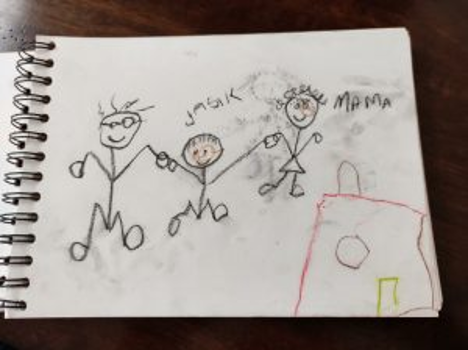
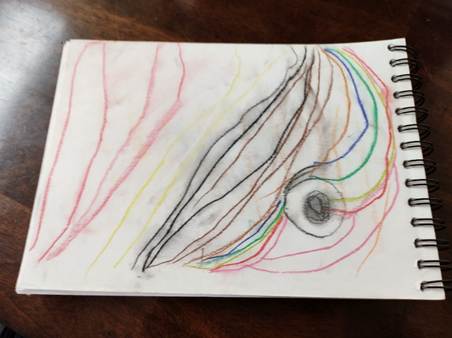
Again, Yasik was brought into the doctor’s office, this time carrying what little remained of the gifts we had given him at our first meeting the day before. The rather expensive drawing book Dave had given him was now filled with scribbles, the crayon set bedraggled. Dave wanting the best for his son and this new little son happily accepting. We dressed Yasik in the new clothes we had brought for him. I think they mostly fit. He liked the shoes we purchased the day before, very proper, sensible little things.
I might put the word NOTHING in caps to stress that Yasik took not one personal item from his first five years of life with him as he left to become a little Canadian in the Vincent family. John Brooks in his memoir of his and his wife’s adoption memoir, The Girl Behind the Door[ix], wonders if it might not have been a comfort to their newly adopted baby had they thought to ask for some item the baby had to comfort herself.
Yasik was shy and quiet during this initiation. And then came the good-byes. The doctor kissed and hugged us. I would love to have the opportunity to talk with her now. A pretty young nurse had tears in her eyes. Had she been a staff member who had a special relationship with Yasik? Bruce Perry, along with other more recent writers, points to research that acknowledges a childhood in the care of more than one caregiver does not have to be disastrous to a child’s emotional development but does assert that the number of caregivers needs to be small, and above all, consistent.[x] From the time Yasik was taken to the hospital at around the age of one, how many caregivers did he encounter with shift changes in the hospital? Would there have been the remotest validity in asking whether or not the option for ‘baby-led or demand breast or bottle feeding’ had been part of the care-giving he had experienced, among other considerations that contrast nurturing a baby in an institution to a family home? How many were part of his daily experience for the approximately two years he lived in the orphanage? What was the impact of the severing of these relationships?
Yasik had two big, crystal-clear tears holding on the edge of his eyes but he was smiling all the same. Dave and I came into the adoption with months of preparation. Yasik was expected to un-attach from all he knew as family and willingly embrace a whole new attachment within a 24-hour span. Lost & Found [xi] asks about the impact no opportunity to mourn the lost life has on the adoptee. In fact, you the reader cannot help but note that everything written thus far is about Yasik joining our dream, nothing about this process from his perspective, leaving behind a biological family with a mama and papa, a brother and two sisters, and then those he engaged with in the hospital and those he had human bonds with in the orphanage.
About five children, one being the little Down’s Syndrome girl Yasik had big brothered, were on the front porch to see him off, calling “Das Vadanya”. Wasn’t it the protagonist in Cider House Rules who watched child after child leave the orphanage, each time wondering why not him this time? Did any of these children left behind wonder if they too had a waiting mama or papa coming for them?
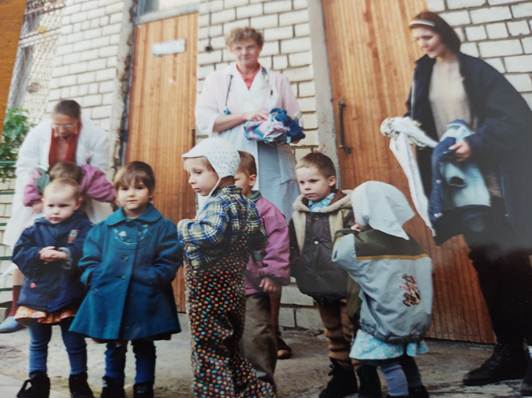
We climbed into the back of our get-away van. Alexi had sad music playing on the car radio. Just a little over 24 hours from a couple to a family. We were about to step from bystanders to parents.
Yet, as good ole’ Arnie says, “We’ll be baaaack…” for as adopting older children reminds adopters, “adoption is a process and not an event”[xii]. Stating the obvious, of course, but a centering reminder all the same.
Footnotes
[i] Delaney, Richard J. Fostering Changes: myth, meaning and magic bullets in attachment theory Oklahoma City, 2006,5
[ii] Mercer, Jean Understanding Attachment: parenting, child care, and emotional development Praeger Publishers, 2006, 2,3
[iii] Perry, Bruce D. , Maia Szalavitz The Boy Who Was Raised As A Dog: and other stories from a child psychiatrist’s notebook – what traumatized children can teach us about loss, love, and healing Basic Books, 2017, 268
[iv] Lind, Judith “As Swedish as Anybody Else’ or ‘Swedish, but Also Something Else’?: discourses on transnational adoptee identities in Sweden” Adoption & Fostering, Volume 36, Issue 3-4, 2012 (https://doi.org/10.1177/030857591203600309).
[v] Easterly, Sara, Kelsey Vander Vliet Ranyard, Lori HoldenAdoption Unfiltered: revelations from adoptees, birth parents, adoptive parents, and allies Rowman, 2023, 60, 61
[vi] Kostyuchenko, Elena I Love Russia: reporting from a lost country Vintage, 2024, 2
[vii] Holland, Julie Good Chemistry: the science of connection from soul to psychedelics, Harper Collins Publishers, 2020, 122-124.
[viii] Easterly, Sara, Kelsey Vander Vliet Ranyard, Lori HoldenAdoption Unfiltered: revelations from adoptees, birth parents, adoptive parents, and allies Rowman, 2023, 40
[ix] Brooks, John The Girl Behind the Door: a father’s quest to understand his daughter’s suicide Scribner, 2016
[x] Perry, Bruce D., Maia Szalavitz The Boy Who Was Raised As A Dog: and other stories from a child psychiatrist’s notebook – what traumatized children can teach us about loss, love, and healing Basic Books, 2017
[xi] Lifton, Betty Jean Lost & Found: the adoption experience Harper Perennial, 1988, 41
[xii] Bosco-Ruggiero, Stephanie, Gloria Russo Wassell, MS, LMHC, and Victor Groza, PhD adopting older children: a practical guide to adopting and parenting children over age four New Horizon Press, 2014, 140