Category: Becoming Family

  • How a Child May End Up in an Orphanage

    This assurance in from Google. Though I personally remember visiting an orphanage in 1970s Alberta, orphanages were phased out in Canada decades ago. These institutions have been replaced by foster and group homes. In Russia orphanages are very much still to be found.   For the city and region/oblast of Yaroslavl with a population of a million plus in the 1990s, I found a fairly current online list of 26 orphanages. The site is copyright from 2006 but as of 2024 is not available. 

    Labels

    Many were simply called Baby House No.— which is a “state residential institution for orphans and children without parental care, age 4 and under”.  But others got specific. There were a couple of Music and Artistic Education Baby houses. Then there were a couple of Social and Rehabilitation Center for Minors orphanages.  One was for children 3 to 18. There were a couple of Sanatory Orphanages for Tuberculosis Children. Others were for hard-of-hearing or deaf children.  One was labelled Agrarian Special Orphanage.  Other orphanages were labelled according the word ‘Type’.

    There is no explanation for the ones labelled ‘of the Type 7’ but those labelled ‘of the Type 8’ come with this piece, ‘for Mentally Defective Children’. Ten of the 26 orphanages in Yaroslavl carried the ‘of type 8’ with the ‘for Mentally Defective Children’ designation.  If, as several articles I have found suggest, a high percentage of children in Russian orphanages are considered, at birth, or after time in an orphanage setting, to be ‘mentally defective’, what does the label refer to? 

    Designations

    Most children relegated/directed to orphanages will be diagnosed/deemed to have developmental delays mentally, physically, emotionally and socially for reasons both viable and/or convenient.

    Several articles and policy papers (see Orphanage Risk Factors) talk of the attitude among more traditional Russian doctors that a baby with a birth ‘defect’ is going to be a problem for the mother so she is advised to turn her baby over to the state just after birth and sometimes without even seeing or holding the newborn.  A Human Rights Watch paper noted, “Many parents face pressure from healthcare workers to relinquish children with disabilities to state care, including at birth. Human Rights Watch documented a number of cases in which medical staff claimed, falsely, that children with certain types of disabilities had no potential to develop intellectually or emotionally and would pose a burden with which parents will be unable to cope”.   Maybe this is true, for Will Englund wrote a piece in the Washington Post called “Russia’s orphans: government takes custody of children when parents can’t cope”.  His report on the issue of children in Russian orphanages:

    The children are almost certain to have at least one disability. The disabilities can be congenital or related to alcohol consumption by the mother during pregnancy — or they have arisen because of the loss of emotional contact that comes with life in a state orphanage. “Every month in an institutional setting has a physical impact on the brain,” said Chuck Johnson, head of the National Council for Adoption, in an interview in Alexandria. “Every child will come with some developmental delays”.

    OK, but do adopters note this when starting a family unless consciously deciding to adopt a ‘special needs’ child? Parents cannot shut down at least a little bit of magical thinking.  How many times have parents wondered at the evident genius in their child, all the while wondering how it was possible for “he or she certainly didn’t get it from me?”   So maybe there is a way to hope that the disability label doesn’t actually apply to our child. And when adopting in countries such as Russia that magical thinking teases out slivers of hope that may sidestep developmental problems.

    But then, in another Human Rights Watchpaper,

    The experts reported that Russian psychological norms are based on very strict criteria. Apart from these norms, however, factors that in the West are considered as being simple medical risks, will, in Russia, be labelled as illnesses:

    *Babies born to alcoholic parents or whose mothers suffered depression during pregnancy will be labelled encephalopathic and remain so until they come of age.  

    *Orphans will be classed as being mentally deficient.

    *Children with a single physical malformation (a harelip or speech defect…) become subnormal in the eyes of Russian doctors.

    Human Rights Watch also found that these early diagnostic practices interfere with a child’s right to full development and in certain cases, to life itself. Moreover, abundant information gathered in Russia indicated several crucial incentives behind ‘over-diagnosing’ that suggest violations of basic medical ethics.

    According to a former charity worker who distributed assistance to impoverished baby houses and has traveled widely in Russia since 1991, one legacy of the Soviet medical bureaucracy encourages hospital staff to avoid any risk of sanctions for errors detected under their care.

    For example, she recalled the case of a child she knew well who had a medical chart with a catalogue of conditions including oligophrenia and encephalopathy.

    A doctor told me that they have to cover their butts. They could lose their job, so they write many diagnoses. And you know the penal system here. It’s a “better safe than sorry” system.

    A second factor that encourages exaggerated diagnoses is the Russian law which, until recently, prohibited international adoption of “healthy” children. “The doctors in the system wanted the kids adopted, so they’d say that this child has a tumor and then “wink” at you”.

    Reading NeuroTribes: the legacy of autism and the future of neurodiversity [i], I could not help but see parallels between the labeling of disability in Russian orphanages with the nightmarish treatment of the disabled in Hitler’s Germany.

    Finally, a widely cited incentive for over-diagnosing is the extra financial subsidy and salary increment that the state grants to institutions that care for children with disabilities. The entitlement to these subsidies was confirmed by children’s rights activists as well as by staff of state institutions.

    One volunteer who worked in a Moscow baby house for a year and a half recalled to Human Rights Watch,

    Once, in a rare honest moment with the acting director, she told me, “We are considered as a medical facility because more than half our children are considered to have medical defects”.  So they could finagle more money for the place.

    Another baby house director told Human Rights Watch, however, that the subsidy does represent the greater burden shouldered by the staff in dealing with disabled children[ii].

    These kids will enter adulthood, work their ways through life with a host of papers labelling them mentally defective like a lifelong albatross around their necks.  And we come back to the question, aside from globally respected diagnoses, what do the labels really mean?  And even with an appropriate diagnosis, what concrete prognosis does the label offer?

    Expectations

    Maia Szalavitz, a reporter and author, and Dr. Bruce Perry, American psychiatrist, [iii] offer a general picture of what to expect when a child spends his or her early childhood in an orphanage, for reasons generational, prenatal, environmental.  There are always exceptions and progress is always being made but what I have read from a variety of sources would corroborate this chapter. I Love Russia: reporting from a lost country[iv], published in 2023, weaves stories through the book of “internats’, institutions for the mentally disabled, describing conditions like the orphanages housing children given the same designations.

    With no verification to the contrary, we assume that Yasik remained in a baby house though he had turned four because, I think it was Julia who told us, Yasik was held at a home he was aging out of for the powers that were felt he was still adoptable.   The largest number of children adopted out is from the baby houses.  I guess there is no surprise there – it seems to me, we humans deeply believe in the wonder of having a baby as the picture-perfect way to establish a family and we just as deeply believe that we have the best chance of molding the little bitty baby into our likeness if the little bit comes to us ‘tabula rasa’.  This belief system resists challenges to other options in ways that may be well below our conscious level of dealing with our lives.

    In any case, when I look at what paper work we have, the orphanage name is Yaroslavl Orphanage.  There is no such plain name on the listing I found so this was merely a sufficient name for the paperwork.  We do not know what ‘Type’ it was.  We do know there wasn’t enough land surrounding the building for it to be an ‘Agrarian Special’ orphanage; with ‘scruffy grass and bare spots, not far from lots of other buildings’, it was hardly worthy of the stimulation a playground should offer children, let alone allowing for even a garden.  It put me in mind of how Tony describes the playground at his orphanage in 1930s Saskatchewan (A Canadian story of Adoption from the 1930s, Becoming Family).

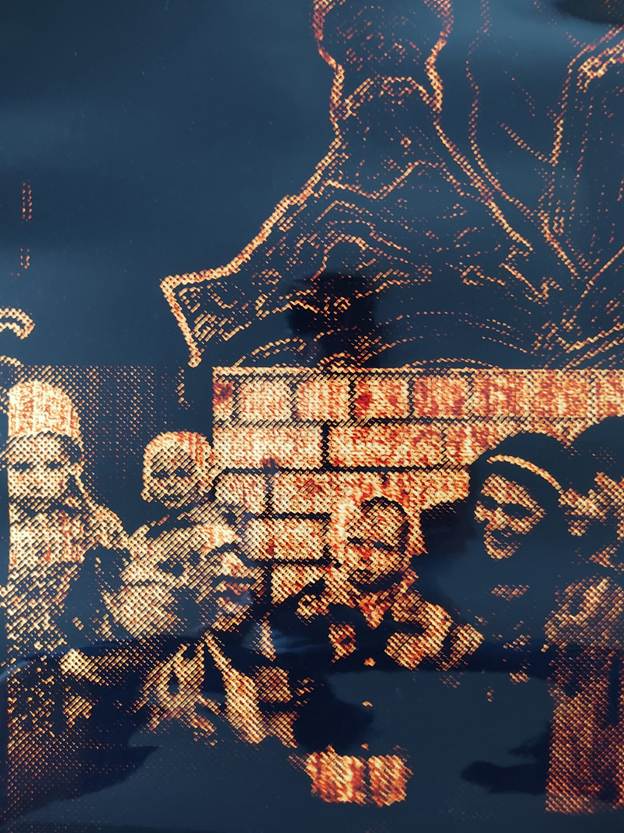
    Inside, the orphanage looked quite small from what we could see in our very limited guided tour.  Staff led us via the straightest route to a receiving room. We did pass through a play room with a child-size piano which he must have played, so ….. maybe this was a ‘Music and Artistic’ Baby house.  Yet, from the picture we have of the children assembled to wave good-bye to Yasik when we came to collect him into our family, there is at least one child with the markers for Down’s Syndrome. Perhaps it was a “Type 8 ” home.
    davevincent.com

    We were taken to the head person’s office, a sweet looking, grandmotherly doctor.  There was another woman at a desk who never once looked up at us, at least when I noticed.  Was she now immune to these emotional tableaus about to unfold once again.  Yes, hindsight could suggest a wide range of possibilities; in the journal I was simply struck by her disinterest but so caught up in the emotions I was enjoying that I could not ask questions.  Maybe she had a stiff neck.

    Have I answered the question specific to Yasik? How did he arrive at this orphanage?

    Yasik was moved to the orphanage before his second birthday. We were given to understand the orphanage did not know when he was taken to the hospital. When we connected with Yasik’s sister and adoptive mother later, we found out that in his first year of life, in the care of his bio-parents, he was found by the social services alone in bed un-cared for and then taken to a hospital where he remained for about a year. There appears to have been little loving response to his physical and emotional needs and desires.

    For many years I told Yasik and myself that Yasik’s mother cared for him, for as the translator told us, his mother came to visit him at the hospital a number of times. At the time I told Yasik that this signified her love for him but that she may have felt it was in his best interest that he be put in an orphanage.  This is a line likely used maybe a tad too often when trying to help a child understand why he or she was adopted. When this line, because “her birth mom loved her so much”, was offered to one young girl to explain being given up for adoption, the young girl[v] was not as grateful as her adoptive parents hoped. “‘I was placed for adoption when I was a baby. My parents never even met my birth mom,” … “so how do they know that she loved me?“‘

    Connecting with Yasik’s older sister also disabused me of that sentimental notion.  Yasik’s bio mother apparently came only to see if she could get a hold of the money the state provided for Yasik’s care. Even at the time, the translator’s mention that Yasik had rickets in those first two years should have ignited some reflection either on the care his mother gave him or the care and attention he got during his time at the hospital. He had rickets and he could not walk until the orphanage took over his care.  Now we have to assume that his parents were responsible for his rickets.  I will add here another thought.  “You have to reach a certain brain mass before you can [walk][vi].  Given his parents’ lack of care, we can assume that Yasik’s development was delayed. 

    Did she not care? Did she feel too cowed by authority and her own inability to care for him? What about the father’s responsibility?  The six-year-old brother did not want to return to the home from school one day because of Yasik’s father’s brutal abuse. 

    Yasik caught up physically in the orphanage to the extent that when our doctor gave him a medical just after we brought him to Canada, he surmised Yasik had built up a strong immune system in the orphanage and he was then meeting the developmental markers for his age.  We adopted a child who simply weathered every illness common to kids with barely a sneeze. Even when it was his turn to get chicken pox, he and his little buddies spent their ‘sick’ week playing in the park across from their school.

    Lest it sounds like I see only the negative perspective I cannot ignore that there is always another perspective.  In balance to the generally negative perspective the West has toward the care provided by Russian orphanages, I would insert a study of two orphanages in St. Petersburg[vii]. This study makes it evident that not all orphanages were damaging to children in their care.  Because we are ultimately talking about human beings with as much love as any the world around, it should be a given and unnecessary to say again that there are in Russia, as anywhere, people working in orphanages who actively seek to do their best for the children in their care despite the need to be pragmatic in difficult circumstances.  Sara Nović, writing of her observations of her adoptive son’s orphanage would agree. Her son was loved and well-cared for[viii].

    Footnotes


    [i] Silberman, Steve NeuroTribes: the legacy of autism and the future of neurodiversity   Avery, 2016, 82-139

    [ii] Hunt, Kathleen  “The “Gilded Cage” of the Dom Rebenka: infancy to four years”,  Abandoned to the State: Cruelty and Neglect in Russian Orphanage Human Rights Watch.  1998, 116

    [iii] Perry, Bruce MD., Ph.D. and Maia Szalavitz   Born for Love: why empathy is essential — and endangered   Mariner Books, 2011, 45-71

    [iv] Kostyuchenko, Elena   I Love Russia: reporting from a lost country    Random House, 2023

    [v] Tucker, Angela You Should Be Grateful: stories of race, identity, and transracial adoptionPenguin Random House Canada, 2023

    [vi] Traig, Jennifer Act Natural: a cultural history of misadventure in parenting, Harper Collins, 2020, 116. 

    [vii] Muhamedrahimov R.J., Arintcina I.A., Solodunova M. Y., Anikina V. O., Vasilyeva M. J., Chernego D. I., Tsvetkova L. A., Grigorenko E. L.  “Psychology in Russia: State of the Art”, 9(3), 103-112. Structural characteristics of the institutional environment for young children, 2016. 

    [viii] Nović, Sara   Mother Tongue: a memoir   Random House, 2026, 198
  • The Adoption Procedure in ’90s Russia

    After playing tourist for a couple of days in Moscow, we were driven about 250 km. north-east of Moscow to the city of Yaroslavl.  It appeared more attractive than Moscow and full of the look of things ancient – over 1000 years old.  Yasik has very old blood in his veins.

    Although we had been driving for several hours, we stopped at a variety of offices before heading to the orphanage. In each office, we were left to wait while our facilitator conducted the business required.  Our only contribution was to offer the gifts we had brought from Canada to whomever was handling the issue at hand, basically the removal of Yasik from the files of Russia. Otherwise, we sat to the side while each transaction took place. In one office where we waited in the outer office on wooden benches while the interpreter talked to the staff in an inner office, we watched an inch worm work its way across the floor.  Dave tried to help the little thing and it freaked in terror.

    Once we had visited several registries to begin the process of removing Yasik’s Russian footprint, our driver turned the van in the direction of the orphanage for our introduction to our son-to-be. Perhaps knowing her time with us was limited, the interpreter, Elvira, suggested we use this short drive to write down questions we might have for the orphanage staff.  That turned out to be a bit useless.  When I pulled out my questions later, I got blank but respectful stares.  I would have loved to know why. We wanted a child—but did not fully understand the system that made that possible.

    While I was naively writing down some questions, Elvira, a school teacher possibly conversant in several different languages, came up with an even better way to use five or ten minutes.  She began to teach us some phrases she thought would be helpful in communicating with Yasik.  Monolingual Dave started mimicking her without hesitation.  I have worked in a couple of foreign languages and know how demanding language learning can be. I wanted to throw up. I was minutes from one of the best moments of my life. I doubt I could have found the focus had she suggested learning some parenting words in English, let alone to memorize words in Russian.  If books written to guide people through the adoption process are merely suggesting adopters, already highly primed to prove how perfect they will be as parents, learn a few tourist-level phrases before travelling to the designated country, I get it.  But some adoption guide books sound like they are suggesting adopters learn their child-to-be’s language by ordering an app from Amazon. Do they have any idea what that means? It is doubtful though even they would dare to suggest language learning be all wrapped in those few minutes before adoptive parents meet their child. I thank Yasik for learning English so quickly.

    It is now 2026 and I am reading Sara Nović’s book, Mother Tongue[i]. I added a piece you’ll see below from her book, and now in my one-last-read before putting the post out there, I know I have to add another of the points made in her book.  She speaks to parents of deaf children who are unable to communicate with their children via ASL signing leaving the child to grow up in a world without the attachment that dialogue with parents develops.  Yes, Yasik learned English quickly and stats suggest most transnational adoptees do so quickly, but what precious attachment opportunities are lost in that time in-between.

    ‘Social Orphans’

    The amazing expectations of those few minutes did not end there.  Elvira also managed to tuck in some information about Yasik’s history.  Yasik’s mother visited him in the hospital where he lived for the first two years but “she moved around a lot”, whatever that meant. I did not question the comment at the time.  Did Elvira expect a show of concern or some awareness of that oblique FYI?  Now I wonder if my blasé reaction was because my mind was pre-set to an assumption against this mother’s care of her children. I have since learned much more about how many Russians saw adoption. I have read parents left their children at a state-run orphanage or what was also called a boarding school while they attended to commitments like education or work away from home.  One source[ii] I did manage to secure writes of how the Soviets in the early years of their regime decided the raising of children would best be done by the state.  In time the costs to the state led to backtracking, rather like the loop of the 150 years preceding the Soviet period.[iii]Nonetheless leaving a child in state care remained a more acceptable option than would have been true in other cultures. If Yasik’s mother “moved around a lot” then state care may have been an obvious choice not only for someone struggling with drugs or alcohol but perhaps someone struggling with other pressures of poverty.  Yasik was, after all, born in the decade after the collapse of the Soviet Union.

    I have no journal entries referring to the role of the father in Yasik’s life because it appears no one told us anything about him. Was this because they knew little about him at that point or was his parenting too shameful to talk about? In post-Soviet Russia, 70% of Russian children lived in households where needs exceeded income.[iv]  These children were so commonly raised by never-married, single mothers that the mothers were a labelled demographic, ‘Lone Mothers’. (When we later learned of Yasik’s sister, we also were sent papers that showed Yasik did have a bio-father present in his first year of life.)

    A mother who moved around a lot and a father who was not considered worth consideration left Yasik in need of state care, but under the designation, ‘social orphan’. Things changed dramatically a few years later as adoption got dragged into Russian-American politics, but this was the environment in which we were adopting.  Children who had either been dropped off or placed in care were designated ‘social orphans’ when they had living biological parents who had the right to return for their children.  We cannot simply assume a child in state care arrived there because someone else was willfully negligent or no longer living. Adoption was not on the table if Russians had just dropped kids off at the boarding school-cum-orphanage while other issues are being worked out. Numbers from 70% to 90% are offered to account for ‘social orphans’ in the state system at the time.  Yasik was a ‘social orphan’. 

    While I walk our dog, Brodie, on the Log Train trail I listen to books. Listening to From the Ashes by Jesse Thistle[v], about when he and his brothers were taken from their addicted father by Children’s Aid Society, I am struck by some similarities with the time he spent there in early childhood. As the brothers settle into fairly institutional care, clean and providing regular meals, the oldest brother explains to other kids residing there that their “‘dad was away and that we’d be going home as soon as the police found him.  “I used to think that, too,” one kid said. “But we’re orphans now – don’t cha know?”  I didn’t know what that meant”‘.  A few weeks later a foster home that would take all three Thistle siblings was found.  They were told they were lucky.  Wouldn’t this too be a Canadian version of ‘social orphan’ with a family somewhere, government intervention and children confused and frightened. Wouldn’t children being sent off to the care of others at a boarding school be an international version of ‘social orphans’?  The parents want to continue a career choice that is not in the best interests of their children so off they are sent. I wondered this when two teens told a caregiver friend of mine that they were not being given a chance to know their parents or real family life.

    However, as we later found out, while Yasik would have been labelled a ‘social orphan’ with living family, a copy of the court papers given to Yasik’s sister and adoptive family show that about the time we began to look for child, the state took away Yasik’s biological parents’ rights.  Yasik was no longer boarding at the orphanage while his parents were working away from home.  He was in process of becoming available for adoption, presumably because the court case was by then being considered. 

    Illegal adoptions, exploitation and The Hague Convention on Protection of Children and Cooperation in Respect of Intercountry Adoption

    However, at the time of our adoption, Dave and I were given no assurances that the parents had either relinquished or had their rights removed. So it was that when I came across articles of illegal adoptions a few years later, I did worry.   I read that a number of Russian adoptions involved illegally obtained children, lacking parental surrender.  I googled this issue and found articles that say, yes, Russia is as haunted by trafficking in children as are many other countries. Russia’s response is not to turn a blind eye.

    Even though domestic adoptions are not highly sought after, there is distaste for the idea that Russians are being taken from Mother Russia.  But above all, we are ultimately talking about human beings with as much love as any the world around, despite the need to be pragmatic in difficult circumstances.  In fact, “In 2008, an amendment to the Russian law on human trafficking re-established that the activity of buying and/or selling a person constituted trafficking regardless of whether it was done for an exploitative purpose.[vi]

    Another article stretched the spectrum of ‘exploitation’ suggested by the word ‘regardless’. This article questioned the money laid out by people from wealthier countries in the quest of adopting a child even for the most wonderful of reasons, family making.  This money alone likely outweighed the cost of raising that child in his or her social setting.  Does this constitute “regardless of whether it was done for exploitative purpose”?

    LUMOS and other organizations like Human Rights Watch make the contention that orphanages can be big business.  Whether fronted as a zealous, even sincere, ‘high calling’ to rescue a needy child, adoption too can be big business.[vii] Either way the desire to help solve a problem can sometimes be turned by others into something hurtful to society. It is an aspect of adoption I only wanted to turn away from as too sickening to contemplate.  An essential paradox?

    Perhaps, but it is important to me to add to this post mention of two books that have come out since I originally wrote this post. One is A Flower Traveled In My Blood: the incredible true story of the grandmothers who fought to find a stolen generation of children[viii]. It is a part of the story of adoption than cannot be ignored. The other is the book I add reference to above, Mother Tongue: a memoir,[ix] which I chose to read because of the adoption story embedded in an overall message concerning disability. Several of the chapters speak directly to the side of adoption that does not get included in the ‘honeymoon’ period memoirs. The chapters, ‘You Before Me’ and ‘Mother Tongue’ target the adoption debate but each chapter in this book is worth spending time weighing for its excellent consideration of an essential paradox. On one page the reader encounters a single word sentence, “Except” turning the reader from the urgency for adoptions, to, at the very least, questionable aspects of particularly the adoptions of ‘social orphans’. Six pages on a paragraph begins with “But still…”.

    And so it was that Yasik became eligible for adoption at the age of 4 in a society that did not easily embrace domestic adoptions and a government enticed by the money attached to foreign adoptions.  These ‘on the one hand’ but then ‘on the other hand’ considerations demand that we recognize, despite the possibility of a better financial return for a child’s care through international adoption in this society can always be found people with heart. 75% of adoptions were domestic in the early 2000s, and somewhere I cannot locate at this writing, I saw the same breakdown for the year 1997. As noted above, Russians, for all the writing about their antipathy to domestic adoption because they do not want a child not of family blood, did process far more domestic adoptions than international at that time.[x]

    Which leaves us with one more conflict between a simple family-making desire and the taint of exploitation. Yasik came close to being included in these stats and another wrinkle in our adoption process. A short time before we left for Russia, we were given the heads up that a Russian family or two were considering adopting Yasik and that another packet of money would secure our position in first place.   We laid the money down immediately. This is not a unique aspect of international adoption.[xi]

    It remains to be said, thankfully, in our particular adoption, whether we were on our game or not, our adoption agency was doing due diligence. They were adhering to The Hague Convention on Protection of Children and Cooperation in Respect of Intercountry Adoption which came into force in Canada on April 1, 1997.  As the Fact Sheet handout given to us says, “The convention is an international law created to prevent abuses from occurring in intercountry adoptions“.   The Fact Sheet does go on to say, “The adoptive family is responsible to ensure that the child they plan to adopt is legally free for adoption and that all legal requirements of both countries have been met, including adoption consents, validity of adoption order and immigration requirements”. Ooh, I might admit that I don’t remember doing that sort of due diligence personally.

    Footnotes


    [i] Nović, Sara   Mother Tongue: a memoir   Random House, 2026, 23, 24

    [ii] McKinney, J.R. Russian Babies, Russian Babes: Economic and Demographic Implications of International Adoption and International Trafficking for Russia (Some might access it at this address March 2009Demokratizatsiya The Journal of Post-Soviet Democratization 17(1):19-40 DOI:10.3200/DEMO.17.1.19-40)

    [iii] Ransel, David L. Mothers of Misery: Child Abandonment in RussiaPrinceton U.P., 1990

    [iv] McKinney, J.R. “Lone mothers in Russia: Soviet and Post-Soviet policy”(now an article needing access)

    [v] Thistle, Jesse   From the Ashes: my story of being Métis, homeless, and finding my way   Simon, 2019, 39-42

    [vi] McCarthy, Lauren A.  “Transaction Costs: Prosecuting child trafficking for illegal adoption in Russia” (this article now needs access).

    [vii] Gutman, David “Former WA Rep. Matt Shea, accused of domestic terrorism, working to secure adoptions for Ukrainian children in Poland”   Seattle Times March 16, 2022 (it appears this article is no longer available)

    Crook, Marion Thicker than Blood: Adoptive Parenting in the Modern World   Arsenal Pulp Press, 2016, 53

    Wellington, Rebecca   Who is a Worthy Mother?: an intimate history of adoption   University of Oklahoma Press, 2024

    [viii] Gilliland, Haley Cohen   A Flower Traveled In My Blood: the incredible true story of the grandmothers who fought to find a stolen generation of children   Avid Reader Press, 2025

    [ix] Nović, Sara   Mother Tongue: a memoir   Random House, 2026

    [x] UN publication Child Adoption: Trends and Policies https://www.un.org/en/development/desa/population/publications/pdf/policy/child-adoption.pdf

    [xi] O’Dwyer, Jessica   Mamalita: an adoption memoir. Seal Press, 2010, (bribery in adoption in Chapter 16, “The Fix”)

  • Name and Identity

    davevincent.com

    Written in 2020

    I have a snapshot in my mind of Dave and I driving through the intersection at Lougheed and Gaglardi Way in Burnaby testing out names for Yasik.   His birth name was Gurin, Yaroslav Nikolayevich –the surname, his given name and the patronymic.  Out Of Line: growing up soviet[i] says this about the importance of naming in the time of Soviet Russia: “In our culture names are very significant. Your name not only tells the world about you, but also about the people who came before you, because your father’s name, adjusted for gender, is added to yours“.  Yaroslav as I said was possibly homage to the region of his birth while Gurin and Nikolayevich connect him to his birth parents.

    A Google scan shows the questions around naming an adoptee are common among adopters, even though adopting older children: a practical guide to adopting and parenting children over age four does not mention the issue of appropriate names while asking adopters to consider ways to become aware of their child-to-be’s culture.  But then turn to Journey of the Adopted Self: A Quest for Wholeness[ii] which has been considered ‘The Bible’ for adoptees.  Lifton devotes a page to the question of naming and her words carry a potency I do not wish to water down with paraphrase.

    As an adopted child, my birth name had been taken from me, and, therefore, according to the beliefs of many old cultures, I was vulnerable to all kinds of dangers.  A name was considered a vital part of you, like your eyes or your teeth, and had to be kept secret so that an enemy could not harm you ….  By taking possession of my birth name, by sealing it away [in sealed adoption files] with the names of all adoptees, society took away my power and the power of all the adopted.

    It is impossible to describe how adoptees feel when they learn that first or last name given them at birth.  The birth name is a confirmation that an individual was born and exists.  It is as integral a part of a person today as it was in ancient times.  As the poet Stanley Kunitz tells us: “Nothing is mine except my name/ I only borrowed this dust.”

    Even when they cannot have a relationship with their birth parents, adoptees may reclaim their names as a way of reclaiming their original identities ….  Sometimes adoptees will use both their adoptive and their birth names, as if not sure which is the real one and which the imposter.

    My husband would be one of the latter.  He has included his birth surname in his public name.  Does its inclusion suggest a question of identity?

    What impact would giving our son a more Canadianized name, shoving the Russian names to the back and deleting the patronymic, have on our son’s sense of identity? We have essentially deleted his birth history.            

    A follow up to Lifton can be found online. At the time I wrote this post, I found the following articles.  Robyn Chittister put up a piece on adoption.com to say a name doesn’t reflect a child’s personality, and it is easy [not sure about that point] to change although adopters do need to think about what impact a name change will have on the child’s world as best they can know at the time.  Jennifer Kadwell put up another piece on adoption.com to say there are no parental manuals to confirm the rightness or wrongness of their choice, but again, Lifton’s observation cannot be ignored. In our global village no name is too ethnic to be considered an albatross.  Jodi Meltzer wrote in cafemom, “It is not about erasing what happened in the past.  You build on their foundation.” which is the point Fraser McAlpine wanted to make in a Guardian piece, agreeing, “[I]t should never be about making the child ashamed of his [or her] birth world”.  In fact, Google has shown us how common our son’s name is in Russia, even attached to some illustrious persons in the Yaroslavl region.

    Impressions we picked up in the pre-adoption phase, seemed to be saying the same thing; recognition of a child’s past and culture is important.  With this in mind, we included Yaroslav in his name.  We cannot say that we did so in full-hearted desire to respect his culture however.  I thought Russia was a country with mysteries I might like to explore but I wanted my son to become as deeply Canadian as I was.  I think Dave felt the same.  Including Yaroslav as one of his names was a requisite nod to approved behaviour for adopters.

    Still that moment in the van testing out names was our, emphasis on ‘our’, naming ceremony for our son-to-be.  We may not have called in the relatives or secured a reservation at the local place for religious ceremonies but the moment stays with me.  Naming a child has always seemed to me something held to be a precious privilege for parents, whether the recipient child would agree or not.   And with good reason sometimes. Case in point, a couple have just named their new born twins, Corona and Covid, as a way to provide a more positive message in a time of stress.  They were wobbling along the right track though, for most of us want to find a name that is a positive message to the child or a way to acknowledge those we love or is a name that sounds cool to us because it is a name trending in the particular decade we inhabit.  We were no different: we registered our son-to-be with a given a name we liked and then were happy to find had meaning that we thought appropriate. We tucked in a second name to honour three relatives in one. The end result was, with the inclusion of Yaroslav, our son’s full name is so long it never fully fits in the allotted space given for names in online documents.

    And on to Moscow.

    With paper work done, passport prepared for Yasik in the chosen name, some child-sized clothing bought, airplane tickets in hand, the night before the flight we opened one of the bottles of wine we had packed as gifts meant to smooth our way into Russian offices; we had crossed off every note on our naive checklist preparing for an adoption. We dusted off the peeling paint and sat on the cement steps of our front porch under what stars we could see through all the street lights and passing cars, and dreamed about our coming life with him.  We saw ourselves as very lucky people.

    In the morning we dressed for the nine-hour flight.  We had to get new American dollars to pay for the items on our Russia trip checklist, the one that would secure our adoption proceedings in Russia.  To be sure those American dollars looked crisp, Dave ironed them.  I had sewn a pocket in my bra for half of them and I had sewn a pocket in Dave’s shorts.  When we stuffed the pockets with the money – $5,000, I looked like I had three breasts but Dave was sporting a male fantasy. 

    Many of our extended family saw us off at the airport and then it was a nine-hour flight to Frankfurt.  We were on our way to the next level of a partnership – up to then we were more like friends helping each other through life, now we were evolving into a unit – a family- with a life bigger than just us.  The trip was cramped, but hey, they gave us each a small hand towel, maybe for the morning shower in the tiny toilet. 

    When we arrived, we were told we would need to declare our money.  I went into hysterical giggles wondering if we would have to be strip searched to declare, but no, so maybe it was all on paper; I don’t remember.  Our driver and hostess showed up to rescue us though they didn’t speak English. Driving through Moscow we kept seeing signs that read Mockba (in Russian letters) 850.  Having done no research before we left, we thought it must be a popular radio station.  It was the 850-year anniversary of a city with a long and rich history of which we were ignorant. 

    The driver, Alexi, took us to a Soviet-era apartment to our eyes in serious need of ‘renos’ – an ancient elevator, heavy, steel, double front doors, a tiny deck with ¼ inch steel siding.  You could see where a bullet had dented it –a design built out of fear.  The furnishings in the interior may have had the touch of a little old lady’s place from the 50s and may not have been Ikea branded, but a sense of art remained evident, complete with an old piano and beautiful wood furniture.    We turned on the TV, which had not left the 50s too far in the dust either. It was likely a news cast interviewing little men dressed in what we did not know was the traditional dress of Georgians, apparently declaring their proud determination to emphasize their independence from Russia.  We knew so little of Russia that we were not aware this program had to do with the worsening relations between Russia and Georgia.  Books encouraging an attempt at cultural awareness should be given heed.

    N.B. The name we use in these journal entries is Yasik, a diminutive of Yaroslav which we were unaware of until we met our son. Had we known we might have retained it for him; he was used to it; we liked it, and in fact, we used it in the early days, mixed in with our given name.  

    Footnotes


    [i] Grimberg, Tina   Out Of Line: growing up soviet Tundra Books, 2007, 6

    [ii] Lifton, Betty Jean Journey of the Adopted Self: A Quest for Wholeness Basic Books, 1995, 268

  • The Adoption Process Officially Begins: choosing a child

    Written in 2018

    I have kept a diary since my 20s.  When I finally obtained a satisfactory level of cool, I started calling it a journal. Now when I am wanting to understand more about becoming and being a family via adoption, turning to my journals is like cautiously pulling the thread novelist Isabel Allende imagines in Of Love and Shadows [i] to unravel the conflict her story narrates. Allende may have used the metaphor to suggest that pulling on a thread would start a damaging unraveling but it struck me personally as a way to see what my experiences were made of. This is not an unusual curiosity.  I have read a library shelf worth of studies and memoirs written by people who because they themselves were parents, both birth and adoptive, or children of an adoption, turned to the study of adoption. They wrote to pull on the thread of their stories, to unravel the parts of their lives that helped them to see the knots and hopefully work them out. I think most of these writers, or artists, or musicians or film makers were compelled from within to do so.  I know this is why I read, watch movies or documentaries, sometimes get directed to music by my husband, sift through my journals- to seek some understanding of our family’s experiences as it has come through adoption.

    And a word to address veracity: Someone says, “I remember it like it was yesterday.” Science arches an eyebrow and responds, “I doubt you do.”  A first-year psychology text addressing memory makes the point that we are constantly reconstructing memory as time weaves new perspectives into our narratives, changing a certainty into a recollection well peppered with what must be acknowledged as fiction.  In the stories I share from my journal, there will be new perspectives and a fair bit of adapted recollecting but I do have a first-person primary source, my journal to guide each narrative.

    The entries I select to draw together into a post have been first read by my husband and sometimes my son.

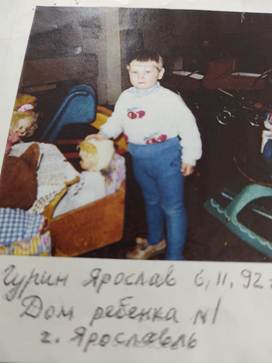
    I start with an entry from June 24, 1997.  Yasik was about 4 ½ and living in an orphanage in Yaroslavl, an ancient city about 250 kilometers from Moscow. Because he was considered cute enough to still have potential for adoption, even at the advanced age of 4 + years, he had been allowed to remain in an orphanage for younger children and on a roster of adoptable children.  He had three older siblings in other orphanages or foster care.   His full name was Yaroslav Guerin Nicolavich; someone told us that Yaroslav is a name he was probably given more as representative of the region he was born into than because his parents saw their new born son as ‘fierce and glorious’, the meaning the name has in Slavic regions.

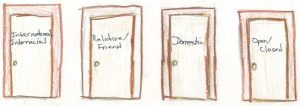
    Drawing by Nadine Paul Jacobs

    Dave and I had been trying to adopt for about two years; this is an average time though for those determined to have a newborn the wait averages out to seven years. Those two years were about learning what the process involved and then standing before the doors labelled: domestic adoption, open adoption, friend of a friend adoption, international adoption, guessing behind which door we would find our child. We chose the door labelled international adoption.

    Dave’s hand was firmly on the door handle.  My fingers were still a bit twitchy.  I have boxes scattered all over the floor and shoes well tested before I walk out of the shoe shop with a new pair of shoes. And there is much, much more to consider when looking for a child than a pair of shoes. Yeah, really.  

    In the midst of laying down money to the society facilitating our international adoption, I would find myself still toying with other possibilities.  Having a biological baby is a desire that is woven into our beings by biology, tradition, culture, religion, and societal expectations. I had once been told that I couldn’t be a full woman unless I birthed a child. This was a desire to experience as much of ‘normal’ as I could squeeze into my life, despite now living in a body beyond the age of reproduction. I was 47 and could no longer give my husband his own child, even though I had never wanted to do anything other than adopt.  But Dave, how was he feeling about never having a little David or Dianne growing into a remarkable likeness of himself?  Dave stopped me up by asking how he could make a big deal of having a child that came from his loins when he was adopted himself.  That settled my twitchy fingers.  We were on the same page about adopting.

    The first child we were offered when we started to apply to Russia was a 7-month-old boy.  The woman who was facilitating our adoption, Julia, told Dave to be considered for this baby he should shave his beard because it had gray in it. I was already well dyed.  But it didn’t help because Russia came back with a policy that said we had to be less than 40 years old to adopt an infant and we weren’t, I being more years beyond 40 than gray-bearded Dave.

    We looked at our options; a biological or adopted infant was out for us.  When I told a friend who was on maternity leave with a toddler, her less than sympathetic response was, “Good, you will not have to deal with diapers.”  I think she saw them to be a waste of good money.  

    The child was going to be an older child.  I was teaching adult education classes, Dave was working on his art degree, and he was meeting our mortgage payments with a week-end job.  We each tucked in minor surgeries; mine left me with a pee bag sloshing around on my thigh while I was stopping in at various offices to get signatures and sign away lumps of money. The pee bag would rock and roll as I rushed about and sometimes surprised me enough that I would jump or yell for what looked to others like no particular reason.

    So did we stop to check out what it meant to adopt an older child?  No.  We knew little even about the state of affairs in Russia.  Would the KGB be following us around? What would the weather be like in August?  At this point all we knew was our adoption process and a bit about the stories most common at the time regarding adoption, the miracle of a god given ‘forever child’.  I knew this label, ‘forever child’ as it had begun to trend, but I was decidedly unaware of the decent body of research on adoption beginning well back in the twentieth century.  No one hinted to us that we might consider even a visit to the SFU library where a study of Romanian adoptions was into its fourth year. We were simply running through a domestic to do list.

    We were working through pages of paper work about our home, our finances, our jobs, our families and our health.  And we had already started to put down money to pay our way through the process of adoption.  If we backed out now we would have to do all that over for another child.  Money always has a loud voice.  So we asked what was available to us if we were not going to be allowed a baby. Julia told us about a 3-year-old boy, wheel-chair bound with cerebral palsy, and a 4 1/2-year-old boy.  We were not open to the 3-year-old because we worked as caregivers for challenged people for many years. We thought we might have a hard time distinguishing between a sense of being at work and being in a family.  We wanted family, not more job.  Is there a stone to overturn here in terms of becoming and being family?  This was not the pursuit of altruism or joining the ranks of rescuers of the destitute. And we were not alone in the drive to seek a family rather than seek to save the lost or destitute. Valerie J. Andrews in her book, White Unwed Mother: the adoption mandate in postwar Canada, begins her study by noting:

    By the end of the twentieth century, adoption discourse shifted, as adoption practice and popular culture placed the emphasis on prospective adoptive parents, …. “the emphasis has changed from the desire to provide a needy child with a home, to that of providing a needy parent with a child.”[ii]

    In I Love Russia: reporting from a lost country Elena Kostyuchenko writes of the tragic events of 2004 at the public school in Beslan.  Toward the end of the chapter, [iii]she notes that some people adopted children perhaps in an attempt to fill the void left by the children they lost that day. 

    Yes I was pursuing the dream that refused to fade which I write about on the home page.  But even my dream of adopting a little blond boy was not about saving his sorry little butt; it was because in my dream I had been given him.  And I know what flags pop up on the landscape with that admission.  I will deal with them in time.  And here is another admission found in this entry: Dave liked that the 4-year-old would allow him to keep going on his studies because the 4-year-old would go to school part of the day.  Doesn’t that sound convenient?  Neither Dave nor I had altruistic ideals fueling our desire to adopt.  We wanted a child and if we found one who would fit our finances and work demands, nice.  BUT… hear a very firm ‘however’ here: being near to aging out as prospective parents, and being low on discretionary funds, we had little leeway to be choosy.  We were two people stretching our necks to be counted as middle class, yet about to pack our lives with some serious financial demands. Factor into these constraints an odd little piece: our school had managed to get us unionized in negotiations that decided maternity leave for adopters could be dispensed with because those at the meeting knew of next to no one planning to adopt at the time.

    Julia gave us the first picture of Yasik: blond- just like my dream, chubby- well, pictures add 10 pounds, and one definitely crossed eye, and as someone at my school pointed out, a very cute nose.  I was looking at this picture of Yasik while calling Julia to tell her we had chosen to go ahead with adopting Yasik.  The little fellow in that picture was drawing me in.  A question I wrote down that day was: How do you hold back dreams?  We were about to do as James Michener suggests at the end of The Drifters when the character Brit says, “[people] ought to inspect their dreams.  And know them for what they are.”  We went shopping – always a nice way to put a dream in action.  We went shopping for a 4-year-old boy. Dave got him a book of paper airplanes.

    Footnotes


    [i] Allende, Isabel Of Love and Shadows: a novel Atria Books, 2016, 140

    [ii] Andrews, Valerie J.   White Unwed Mother: the adoption mandate in postwar Canada   Demeter Press, 2018

    [iii] Kostyuchenko, Elena I Love Russia: reporting from a lost country Random House, 2023, 215 & 216