This parenting style, it seems to me, is the most difficult to consider. Some of the definitions online assess the benefits and drawbacks for the parenting styles. For this one, Neglectful/Uninvolved they state quite baldly, there are no benefits.
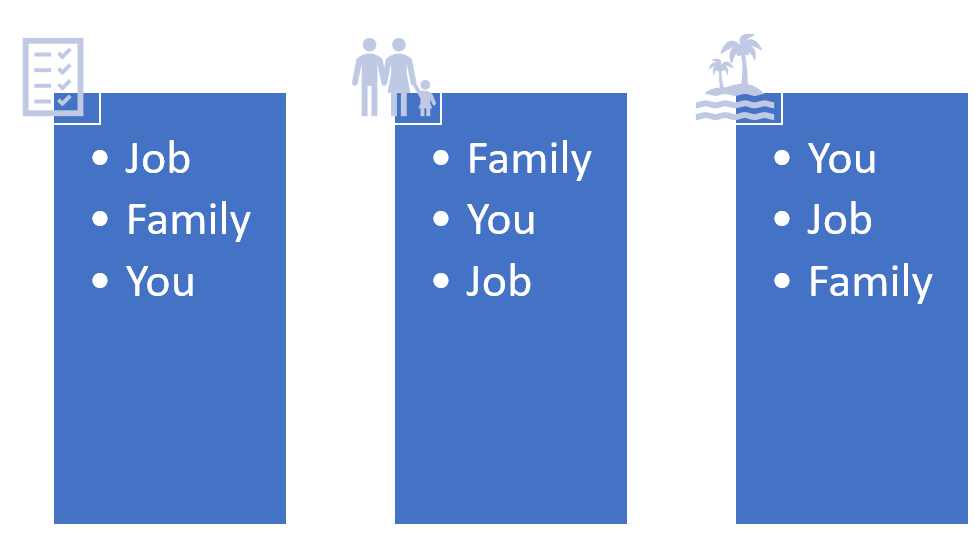
Riding the sky train to work in ’96, a year before our adoption, I saw a poster without the Uncle-Sam-pointing- finger but catching my notice nonetheless. I don’t remember what was being advertised, but its focus was ‘the new priority’ – job, family, you. Now I truly wonder what organization would want that as a sales pitch, unless it was a bid for irony, or perhaps, something about work/life balance. And good on me. As I read it, I thought if the job did take priority during the week I would try very hard to keep weekends free for my son.
The New Priority
Your Choice:
1 2 3
So let me state straight up at the start of this post: only once (as I have said in earlier posts) did we leave him at school day care. Kudos to us.
Then where do the following journal entries fit in?
At the end of our very short parental leave I started back to work, teaching a 5:00 pm class on the first day of the new semester. Dave was taking advantage of some studio time after one of his classes. Lucky for us, still new perhaps to juggling schedules, my mother and sister happened to be visiting or maybe I had reeled them in as they lived only two hours away. Yasik had spent about 2 or 3 hours with my family up to that evening. I was pretty sure he knew they were gift bearers and friendly, and I knew he would be more than safe and cared for by them. But I had no idea what might be roiling in this little heart that had now known 3 weeks of belonging against 4 and half years of insecurity. I made sure he had strapped himself into the bumper seat in the back, my sister and mom took the front seats, I slipped in beside Yasik and we drove off to Vancouver. 5:00 p.m. is full -on rush hour and my school is situated on a tightly organized street. There was only a moment to double park, pop a quick kiss and jump out. My heart holds the memory I caught as I turned to wave good-bye to this little boy alone now in the back, watching me wave and turn away. I remember his confused face; I remember him turning to my sister, I guess hoping for the best. Both she and my mother quickly offered reassurances as they turned back into the street. Of course it was all Ok. He was taken back to our home; my husband picked me up after class and by the end of the evening we were all ‘happy families’ again (the positive, not the negative connotation).
And so began the daily battle of what we often refer to as modern day parenting: parenting demands pitted against work expectations. And the underlying motives for such battles? Some would say it is succumbing to the Siren Song: You Can Have It All. For others it may be simple economics. (Those now opting for a dog or cat were mostly still in grade school in the 90s.)
Perhaps because I had succumbed to the Siren Song, I chose Adult Ed. over the parent-friendly hours of an elementary school teacher. Adult Ed. schools are not found on every corner so there would be a lengthy commute. Classes offered work-around school hours. My husband had secured a long hoped for dream of attending art school. Nonetheless, we believed we could juggle effectively. And for the most part we did make it work.
But there were inexcusable moments. I actually chose Adult Ed. because I wasn’t interested in the ‘cut and paste’ of elementary ed. Now I needed to take Yasik to his first day of kindergarten. Two and a half hours of playing with rabbits and trying to get Yasik to buy into staying there. The teacher and her assistant were an alien breed to me. They talked in cutsie voices and it is safe to say we were not doing a novel study.
But the teacher spoke Russian and handled all the children well – so I sat it out and we made it through a long 2 ½ hours. I know how long it was because I kept an eyeball on the clock, desperate to get out.
Obviously, my mood was bare minimum motherly. God bless the teacher’s aide who took over, drawing Yasik in by dangling technology and books before him. This kid had only a few words of English, was prematurely peer-oriented without knowing what he was dealing with among this new set of peers, and still uncertain if his parents really were people he could count on. Every fiber of his little body must have been desperate to get out of there. And I was hrumphing about having to be there for 2 and half hours of kiddy stuff.
The last weekend of October ’97, just before Yasik’s fifth birthday and our first with him, we took him for his first visit to my parents’ home on Vancouver Island. This would also be his first Hallowe’en adventure.
At first the thrill for Yasik was getting to run up and ring the doorbell. And then the wonders of freely dipping into a bowl for a handful of candy. And for us the wonders of watching the wonders that were his. We put him to bed in my parent’s large bedroom, up and away from the rest of the house, still in that glow, but planning on some adult time with family downstairs. While we were laughing and talking together, my sister, an elementary school teacher who is more attuned to young children, slipped up to check on Yasik. She found this little mite, swallowed up by the bed, and staring wide-eyed into the darkness. She slipped in beside him and whispered with him until he fell asleep. The memory stays with me.
One Saturday afternoon, my day off and after my marking was finished for the week, I took Yasik shopping at the nearby mall. He was now our child for 3 months.
I took him to the mall to get long pants for the cooler weather. Soon he was pleading to go home. Dave would have been pleading too by this point, but he had already learned to avoid following me around a mall.
“Momma, Yasik go home. Momma Yasik GO home”. (Well, it would have been something like that.)
“Just wait, please Yasik. I’m just checking this one more store”. Trying to accommodate, I ran ahead of him to a shop, lured by a rack of clothing on sale. I have never been certain that for a moment, with all those clothes crowding my vision, I didn’t forget about him. I seemed to have assumed that he was right behind me and could see where I was headed, he of 40 inches tall, barely reaching the mid-point on the rack. Of course, unused to malls, limited in English, he missed my side-step around the rack.
I clicked back into parenting within what seemed to me mere moments, though the journal says somewhere between 2 and a whole 7 minutes or more, and stuck my head around the rack to check on him. He was not there.
As it was created to do, the urban myth about the child kidnapped in a mall, went all breaking news in my brain. I started scanning in every direction and frantically checked out the nearby shops and then called out to a security guard walking past. And he did his job, trying to calm me, calling for other guards to watch and striding off to look.
I heard Yasik crying before I saw him. There he was holding a guard rail in front of The Bay on the opposite end of that level of the mall. His face was stricken. He was standing there with big tears, and once seen, made no further sound. I gathered him to me, and held on for dear life. I thanked the relieved guard and led Yasik to the closest clothing store, to a change stall. There I pulled him into my lap and we cried, sitting on that change bench until he quieted. And then we got out of that mall as fast as our shaky legs could go.
It can happen just as they say, that fast.
It is possible to think that Dr. Gordon Neufeld, had he watched this scene, would have understood Yasik’s frightened cries as coming from his deep understanding of abandonment. In a class lecture Neufeld made the point: “There is no experience that has more impact upon us as humans than that of facing separation”.[i]
Some of these examples of times of neglectful parenting can be chalked up to being new parents, still learning the new reality, but the following examples cover times when lack of experience doesn’t hold water as well.[ii]
For me, the weakest link in my parenting was the many times we let our son have overnights with school mates even before our first year with him was up. He was at the age for which it is common. It solved babysitting strains for several families. Yasik was well-attuned to playing with other little kids having spent most of his time until he became ours with many little playmates.
However, those rationalizations were long ago countered for me by a story in my nearly worn-out copy of Attaching in Adoption: practical tools for today’s parents[iii]. This story I have for so long worried over is about a couple who did not allow any allo-parenting for the first two years with their children in order to secure the children’s attachment to themselves. They did not allow their children to have sleep overs or be babysat by others. The children went everywhere with them and were cared for solely by themselves, wanting to ensure that the children understood what the meaning of family now was.
Still …, I think your average parenting book will encourage allo-parenting, the ‘it takes a village to raise a child’ concept. Hunt, Gather, Parent: what ancient cultures can teach us about the lost art of raising happy, helpful little humans[iv] is all about cultures where sharing child-raising within a community has great value for children. Granted these are children who likely have known secure attachment their entire lives.
For children whose early years have offered little in secure attachment perhaps nuclear attachments are essential before taking the child into a wider social circle. It is reasonable to suggest Yasik’s understanding of family may have been unclear.
And once again, Yeah Ok, – But …, Peter Lovenheim in The Attachment Effect: exploring the powerful ways our earliest bond shapes our relationships and lives[v] counters some of John Bowlby’s strong emphasis on the caregiver. Lovenheim sees room for adaptation for, as social beings, we are not necessarily damaged by receiving care from more than one caregiver in order to establish a secure sense of attachment.
Our week days were well packed with school and work and the commutes tying it all together. As we saw it, that meant lots of left over demands for the weekends. If the neighbour wanted Yasik to have a sleep over at her house to free her from the demands of keeping her son entertained and if Yasik was eager to play with his friend, allowing Dave time for to complete assignments and for me to get 27 essays marked, this was a win-win all the way around.
“‘When you are in a jam, it’s hard to remember that you are in a relationship with a person, not just trying to get someone out the door in ten minutes. Problem is, we have our own agendas and sometimes we see the kid as an impediment’”.[vi]
Bouncing back from Peter Lovenheim, I, still uncertain whether or not to shake off my sense of guilt about jumping too quickly into allo-parenting, return to the arguments of Gordon Neufeld, PhD. and Gabor Maté M.D.[vii] They begin the book’s argument for securing parent-child attachment before allowing the child free range with peers with this: “…in the short term, peer orientation appears to be a godsend”. And as a salve to any worries, Dr. Neufeld acknowledges that “At first glance peer-oriented children appear to be more independent, less clingy, more schoolable, more sociable and sophisticated”. But then Neufeld and Mate give the reader 264 pages to say, “WRONG! IT IS NOT A GODSEND!”.[viii] Yasik was simply not yet secure enough in his attachment to us. Sleep-overs in the first years as a family were not a win-win for us.
It also cost us precious memories like being the ones who took him to the PNE for the first time. I marked papers, Dave completed university assignments and Yasik went to the PNE with the buddy and his parents.
But were we even aware of what trade-offs we were going to have to deal with? About all the awareness I can find in the journal was ‘we are all just caught in a big pressure pool and we’ve got to help each other.’
Dave’s contribution when I read the Neglectful/ Uninvolved parenting definitions to him: “I was triggered by Yasik and you and the dog to be involved but at times would have rather indulged in my own interests and engagements”. That is Dave, easily guilted into taking care of others’ needs, even when he wants to do his own thing.
Yasik’s input when I read the definitions to him: “I think you know the answer to that. Yes, there were times when I was left to fend for myself” (though he was mainly referring to times later than this period). “Look where it led me”.
Footnotes
[i] Easterly, Sara, Kelsey Vander Vliet Ranyard, Lori Holden. Adoption Unfiltered: revelations from adoptees, birth parents, adoptive parents, and allies, “Referring to Dr. Gordon Neufeld’s words… (Gordon Neufeld, PhD, “Session One: Becoming Attached,” Recorded Class Lecture The Art & Science of Transplanting Children Course, 2011). Rowman, 2024, 142
[ii] Perry, MD, PhD, and Maia Szalavitz. The Boy Who Was Raised As A Dog: and other stories from a child psychiatrist’s notebook. Basic Books, 2017, 168.
[iii] Gray, Deborah D. Attaching in Adoption: practical tools for today’s parents Perspectives Press, Inc., 2002, 62
[iv] Doucleff, Michaeleen, PhD. Hunt, Gather, Parent: what ancient cultures can teach us about the lost art of raising happy, helpful little humans Avid Reader Press, 2021
[v] Lovenheim, Peter The Attachment Effect: exploring the powerful ways our earliest bond shapes our relationships and lives TarchgerPerigee, 2018, 71-73
[vi] Neufeld, Gordon, PH.D. and Gabor Maté, M.D. Hold On To Your Kids: why parents need to matter more than peers. Vintage Canada, 2004, 196.
[vii] Gordon Neufeld, PhD. and Gabor Maté, M.D Hold On To Your Kids: why parents need to matter more peers. Vintage Canada, 2004
[viii] Neufeld, Gordon, PH.D. and Gabor Maté, M.D. Hold On To Your Kids: why parents need to matter more than peers. Vintage Canada, 2004, 235, 237.
Leave a Reply