I was still trying to sleep at 7:30 am, the retiree’s right, I believe. Brodie, our Rottie/Shepard-cross hadn’t read the policy which lays that point out quite clearly. He’d heard potentially exciting noises coming from the trail across the street. Not really aware that going out the backdoor doesn’t connect him to the front yard, he wanted me to help him check things out. With absolutely no regard for my rights, he confidently strode into our bedroom, came around to my side, nosed my bottom and then sat back on his haunches, expectant that I would now jump obediently out of bed to let him outside. I didn’t roll over, so Plan B. He started 20 minutes of intermittent whining, stalking out of the bedroom, returning to whine and I caved. Ok, so he did have to pee, but he was out there to warn off potential intruders. Brodie got to indulge the joy of threatening barking. I got to deal with the fallout before the neigbourhood noise patrol began shaking their annoyed heads. I know, I know, any good dog training book I’ve read says we should not give into our dog’s whining or allow him to learn that whining is a way to get what he wants.
Are there parallels here with how Dave and I might have parented Yasik? Actually, there are likely many, many more media sources on Permissive Parenting than on lax parenting of our puppies.
Surprisingly, at least to me, I don’t have many journal entries pointing to Dave and my experiences with Permissive Parenting. Not that we can’t find ourselves often enough in the definition of Permissive Parenting. Just the other night, on a call to Yasik, Dave called him by Dave’s younger brother’s name, something he has done many times over the years. He mixes Yasik up with his younger brother both because of what a brother signifies and because this brother was one of his closest friends growing up. Hearing the mix-up, though I have heard it many times before, I ran for note paper as I am now looking at the definition for Permissive Parents, that of seeing or wanting to see the child in the light of a friend/buddy relationship rather than in the light of the parent-child relationship. Of course, now, though it is a slip of the tongue, it is also, as father and son interact, a compliment.
For me, at times, the razor-sharp line between playful interaction with my child, wanting him to see me as his friend rather than see me as taking on the responsibility of mothering, began as I recount in the post, Parents? Yet Tourists?, barely a half hour after our driver turned the van back toward Moscow. The translator initiated a slapping game much like pat-a-cake. Four-and-a-half-year-old Yasik, in the middle of a vehicle full of strangers, most of whom were wrapping him in happy attention, was by now feeling the Russian version of Yeah! Alright! This is Cool! Translation, maybe Yasik’s emotional dial was swinging a bit out of control. Moments into the little game, there was a more haphazard but stronger sting to the slap. I have never been comfortable saying “No” to much of anything, let alone the first half hour of excited play on my first day with my son. I allowed the slapping to continue until Dave thought it had gone too far.
For Dave the boundary between friend and parent became more apparent later as he and Yasik explored the wonders of the computer together. Nonetheless, for neither of us would this, any more than any of the other parenting styles, have been a conscious parenting style selection.
Once we felt Yasik was settled into our lifestyle, we set about honouring the suggestion given to us at the orphanage to encourage Yasik’s interest in music. It was evident watching his wonder listening to music via headphones on the return flight from Moscow. It was evident watching him soothe himself, alone on the living room couch, rocking and singing songs of his childhood. He loved music. Did we have a rock star or a Mozart in the making? Whatever, we were going to follow up on the orphanage’s directive. As far as we knew that meant getting him into piano lessons. And for the first while Yasik seemed quite happy with the music lessons, admittedly, maybe more so when he got to play the drums in the class. At his recital, he seemed proud to be dressed in long pants and a nice shirt, playing Twinkle, Twinkle, Little Star in front of an audience. Dave and I were in tears. Twinkle, Twinkle, Little Star never sounded so amazing to my heart.
The practices leading up to this recital had been less tear-inducing, more frustration and laughter inducing as Yasik would flop his head down on the keyboard when asked to hit the keys. Still and all, we were giving him the opportunity to develop a skill we believed had roots somewhere within him; we were giving him every opportunity to find his place in the world.
So why was Yasik not embracing the opportunity with the appreciation and thrill we had imagined? Yasik continued to moan and groan and flop around on the piano seat through the mere 10 to 15 minutes of piano practice before school. I countered his misery, sometimes with desperate threats and other times with conciliatory bribes. We were ‘giving him the opportunity’ with threats and bribes – two side of the same coin?[i]
That last sentence might lead you to ask why I put this story in the Permissive Parenting post rather than the Authoritarian Parenting post for it is a bit of a stretch to see it as illustrating one of the traits in the definition of Permissive Parenting: These parents mostly allow their kids to do what they want and offer limited guidance or direction. They prefer to avoid conflict and will often acquiesce to their children’s pleas at the first sign of distress.[ii]
The journal records one particularly bad lesson after a week of sketchy practice. I have not recorded (in itself a comment) how Yasik might have been feeling, but I image relief that the class was over and he was going home to TV, computer time or maybe the freedom to go down to the park to play with his friends. I came away from the awkward class hour feeling self-pity at my unrewarded struggles to get him to practice, probably the driver of the next few minutes. I asked him if he wanted to quit piano.
“Yes”, he said. Groan.
“We’ll have to get rid of your piano you know.”
“Ok.” This from a kid who had shown signs of the hoarding trait sometimes noticed in kids who’ve spent time in an orphanage. I guess the need to hoard was no longer a trigger; maybe competition with his cousin would trigger him.
“We’ll give it to Kyle”, who a couple of years later showed roughly the same interest in piano as Yasik. “OK”, he said.
I’m dead, foiled, parried, screwed.
On to the next manipulation. I turned off North Road at Foster Ave. to loop around and return to the building housing the piano school. I told Yasik, now showing some concern, that I was disappointed in his choice. No comment.
But if it was his choice, then “OK, you can quit if that is what you want – but you have to tell Mrs. B. We are going back to the school to catch her before she closes up.”
“OK.” Maybe it’s for the best I even thought. No more hassle. But I hated to have to tell Mrs. B. I hate disappointing authority. And what if it was a chance he’d never have again.
And into this downward-spirally dream (mine or his?) came an inspiration. I had just run a yellow light near Lougheed Mall and he’d told me to be careful. He had less confidence in my driving abilities than in his father’s.
“OK. If you quit, I can too. I’m just going to quit driving. I’m not good at it. It’s too hard. We will park in the mall and then we will walk up to the school. You go in to tell Mrs. B. you are quitting and then we will leave the car and walk home. Dad can come and get the car.” It was now becoming dark, cold and raining. We bundled up, got out and started to walk. Seriously.
He was saying we can’t do this. I said we can and we marched.
We walked almost two blocks when he said, “I was just fooling. I won’t quit.”
And I said, “OK, I’ll drive.” I grabbed him and hugged him. He was embarrassed in the street but I know he was happy for the hug and kiss, and relieved that we were finally just going home. For a plus, when we reached Lougheed Mall, I let him drive (sitting in my lap of course) around the empty parking lot. Manipulation or not, I wondered at the time.
I was holding Yasik to piano playing not in a direct authoritarian, no revolt-tolerated plan of action, but with bribes and threats in ‘his best interest’.
Is it possible that both Authoritarian Parenting and Permissive Parenting come from a place of parent-driven choices for the child, one coming at it from direct demands, the other from threats and bribes? Do permissive parents really not want to get in their child’s way? Or do they think that a softer approach will get them what they want?
One night I came into Yasik’s bedroom at the end of an evening as I routinely had done since his first nights in our home, to read him to sleepiness. I had been reading him books that progressed from one-sentence per page stories to the magical Harry Potters.
One such night Harry gets into some trouble and Yasik said, “He should have just lied to save himself.” What does a formerly god-fearing, morals-valuing mother say to that?
With all the backbone of someone who hates conflict, I muttered that I didn’t think Harry lied.
Yasik came right back with, “Sure he does.”
Two pages or so later, Harry definitely lies and Yasik said, “See Mom.” There is no record in the journal of any morally-guiding comeback from me.
When Yasik was around 12, he came to the decision that the nightly bed time book routine must come to a halt. Sleeping in a top bunk, he had barricaded himself or snugged himself up there by draping blankets over the edge of the bunk’s sidings. He popped his head over his parapet to tell me I didn’t need to read to him anymore. And that was that. I accepted his decision with hardly a whimper.

Have we ever resolved the question of whether or not it is problematic for little boys to play with toy guns or how much TV or computer time is damning? Media regularly report rumblings that the government is going to apply restrictions in the ‘best interests of the child’. So was it cute or worrisome to come into our living room to find our young man sitting on the couch with his little hockey stick, popping off cars passing by on the street. Little boys, they say, turn anything from carrot sticks to Lego blocks into guns. I went with being disconcerted Yasik had become too interested in shooting bad men while Dave was tempering. Yet if we truly believed shooting cars with a hockey stick would lead to a life of crime, our response was lame. Yasik went from hockey stick guns to computer games like Quake. Even if I did feel, and at times muttered to Dave, that such games might be deleterious to a healthy moral upbringing.
It is less clear in the journal whether we showered Yasik with too many things; certainly he had everything any of his friends had, but was that not par for the course for a middle-class lifestyle?
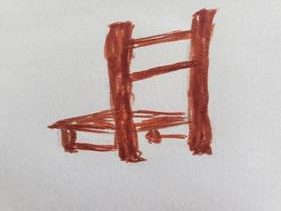
So let’s go back to those ‘mutterings’. They might segue into a peek under the covers of our marriage. Which could be a somewhat misleading metaphor. Rather than where your mind might head if on auto-pilot, focus on the blanket covering our marriage bed, flopping about as the two individuals beneath each seek a don’t-go-to-bed-in-anger relationship and a good night’s sleep. This to say that if Permissive Parenting style defined any part of our parenting, it was more often than not expressed by one or the other of us, not often by both of us together, ergo the image of the blanket covering marital tensions beneath it: Good Cop/Bad Cop parenting.
Starting right from that first hour as parents in the van. Even as Yasik was hitting and later biting, I was reluctant to say “Nyet!” Dave did say “Nyet!” when he thought Yasik was crossing a line. Within a few weeks, Dave felt he was looking like the bad guy and being rejected for “Nyet!” was coming from him more often than from me, putting him in a less favourable light with Yasik. That metaphoric marriage blanket settled into an uncomfortable silence.
We were each pulling for our share of the blanket when Yasik needed to go ‘sikats’ on his own. I wanted to help that little penis point in the right direction but Dave felt Yasik was ready to practice aiming on his own. I think Yasik did figure out where to point.
It wasn’t all awkwardness or tension as Dave and I tugged for cover over permissiveness or strictness under the marriage blanket. There were funny moments too. Times like one afternoon. Dave had come skulking around when he felt I was being too easy on Yasik for an impudence or tantrum. All 40 some inches and 40 lbs. were trying to stand up to Dave and I. When it ended with Yasik crying, Dave turned and went back to the computer set up in the kitchen. I followed him and Dave, with his back still to me, said, “And I don’t care what you think”. Then he wheeled around and demanded, “What do you think?” Partly delay tactic, partly not knowing what to say and wanting to avoid conflict or feeling the moment was not right for talk, I returned with a confused, “I haven’t thought anything yet”.
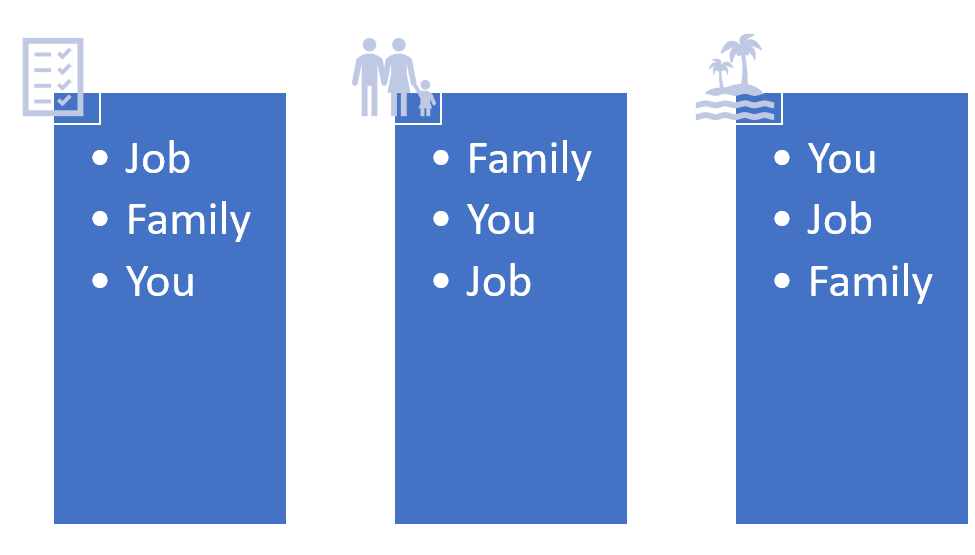
In sum, Dave and I concluded that he expected too much and I expected too little; this was probably in terms of differing priorities because I suspect that while Dave wanted Yasik to learn to behave appropriately and respectfully, I wanted him to do well at school. Depending on which priority was being tested by Yasik, one or the other of us donned the cop uniform we felt necessary for the moment concerned. Sometimes Permissive, sometimes Authoritarian?
But all this high-minded talk of priorities can get very personal and somewhat less the look of child-centered parenting. At the time it felt to Dave like the two of us were siding against him. When Yasik and Dave were on the computer, I felt like I was left out. But did we see more clearly what the problem and solution were? Not really – we weren’t able to step outside ourselves to look at the problem. The journal suggests I did realize I had a husband who was fascinated with how things work and what they lead to when they work; at that time, it was the computer which combines technology and art potential and it kept one step ahead of him. Besides which he was learning things we all needed to know. I got a chance at a good education later in life and I valued it as one of life’s highest gifts. We also had a young son who wanted our attention most of the time even if his emotions degenerated into hitting out in over excited play or anger, responses that should not be excused or ignored.
Was he getting spoiled as Dave suggested? How is ‘getting spoiled’ even defined?
The one explanation that cannot be countenanced in a question of becoming spoiled by our Permissive Parenting is the accusation that a child is being manipulative. One evening when Yasik was a few years older, my journal says ‘Last night after Yasik worked on manipulating me by saying, “You guys never play with me.” I agreed to play a board game with him. Dave came in to say, “No, we should teach him not to say ‘Never’ and guilt trip us. He should know to just straight out ask to play”.
The common thought, most of my adult life has been that children are capable of manipulation. Recently I have noticed writers take a paragraph or two to caution against that assumption. A child needs a developed pre-frontal cortex to manage the executive function I suggested he was employing, something not operating until the child is no longer a child, a tantrum being a child’s way to express frustration.[iii]
Dave and I have always been determined not to give up and close the door on trust of each other. After some time stewing we would talk about issues of expecting too much or too little and how to give Yasik more independence because we do believe in not taking our disagreements to bed, lucky for the blanket.
So what did we have in the end? A tenderhearted man who was frustrated by feelings of guilt and fear of being left out, a son who was just being a kid, playing with those he loved, and a woman who struggled between a daydream and reality, wanting to enjoy picture perfect and knowing there are realities, some of which I accepted and some I didn’t. Work and school’s priority I understood, but Dave and Yasik wanting time on the computer to play computer games, not so much. Dave understood playing on computer but a kid having a tantrum, not so acceptable.
Yet, the interactions within a family are five minutes of this and then, spin, and it is five minutes of something totally different. A fine line between fun and tension, yet something to take note of.
Footnotes
[i] Benaroya, Melissa “Threats & Bribes: Two Sides of the Same Coin” ChildProof Parenting Oct 4, 2016 https://www.childproofparenting.com/blog/threats-bribes
[ii]Zeltser, Francyne “A psychologist shares the 4 styles of parenting — and the type that researchers say is the most successful” DOCTORZELTSER July 1, 2021 https://www.cnbc.com/2021/06/29/child-psychologist-explains-4-types-of-parenting-and-how-to-tell-which-is-right-for-you.html
[iii] Knapp, Katie, MSc, J. Bruce Mortson, PhD “Brain Development and Executive Functioning” Encyclopedia on Early Childhood Development January 2013
Tracy “Toddlers, Meltdowns and Brain Development: Why Parents Need to Ditch Traditional Discipline raised good https://raisedgood.com/toddlers-meltdowns-brain-development-ditch-traditional-discipline/