I think we managed ‘happy families’ (check with the Brits on that one) until we signed Yasik up for school – roughly 3 weeks. The journal says Week 3 was ‘one heavy duty week’. Yasik was, in parenting jargon, ‘testing boundaries’ in ways I have read are not unusual for institutionalized adoptees, or, for that matter, children from a great variety of family settings. His arsenal, sans effective verbal skills at the time, was physical: kicking, slapping, pinching, punching when we frustrated his desires with a “No”. Surprised that the little cutie wasn’t seeing things our way, and having not prepared ourselves for that possibility, we went full ‘do what our parents did’.
We spanked Yasik. In our defense the journal testifies, only one smack to his bottom. Yasik cried but the smack quieted him, so I guess it slipped under the wire for not being abuse.
Perhaps the crying though shook us up because we did some serious weighing of the pros and cons. We knew we were not comfortable talking about our autopilot choice to spank with anyone else, at all. Is spanking just politically incorrect or emotionally damaging? Is it faster and tidier? Does it teach him to hit to make a point? Parents Under the Influence: words of wisdom from a former bad mother considers it important to clarify the basis of a choice to spank: if it is not a “malevolent impulse” or causing “lasting pain” it may be fine. For her it is quite another matter if it is regular and the ‘go-to’ response to the child’s behavior. Leaving long term negative consequences, it is abuse.[i]
But Yasik needed to pay attention to our authority. He couldn’t be hitting back or talking smart we felt. Then again, were we thinking through the expectations we had that set him off?
Right from the start, putting him in kindergarten, I was rushing him and we were regularly late to school, igniting volcanoes of frustration between us.
Dave and I were a couple born in the tail-end of the traditional parenting era, and now in our own middle years, we were coping with a daily experience more often the purview of a young couple (a common experience for adopters), and parenting a child with limited communication experience in English and very new to developing a sense of secure attachment to parents.
My only spanking experience up to this time had come when I was in my mid-twenties, with no parenting experience and still unquestioningly believing in “Spare the rod, Spoil the child”. I was babysitting for a couple who were raised, like me, in a traditional and religious society and who regularly turned to spanking to rein in their active adoptee. One morning when friends were visiting, the child misbehaved. I carried him into the bedroom and between whacks, screaming and crying filled the household. After all was returned to quiet and smiles, the woman visiting commented to another friend, “It seems to me that people are harder on children who are not their own.”
That observation struck hard against a firmly unquestioned, and untested belief. Sensitivity to the comment was still there twenty years later to rattle my ideas about disciplining Yasik.
‘Time Outs’ seemed to be bandied about among knowing parents we were in touch with as the ‘done thing’. Dave said that was how Dennis the Menace was disciplined; it sounded like a good recommendation, I guess. We embraced it as a discipline we could admit to among our circle of friends, and anyway, we had a child’s wooden chair as yet unfulfilled in its destiny.
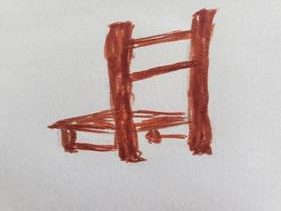
We swung it into a corner of the hallway, getting into position to do battle. I remember experiencing less emotion or stress when disciplining was simply the smack. Now we were starting the disciplining process with a tussle to get him on the chair as he and we were still amped up. Next was the stand on guard to keep him on the chair. But he did acquiesce, even if at times with tight-lipped giving in that could be read as ‘I will bid my time until I am bigger’. Other times it was hard to keep a straight face. When once he had to give in, he would turn to us to humbly plea, “No look,” before he stood up and went off to do what we ask. There was also the time I held him in my lap until he gave in and sat on the chair quietly and then he slipped over to me and we kissed and hugged. Wish I’d done it that way more often.
And miracle of miracles, in short order just the threat of the chair seemed enough to get compliance. Check that method off and move on. Again, without a lot of reflection.
A couple of cases in point.
One evening after work, I was tired, impatient and would not wait for him to play in the tub where Yasik was finding endless wonders. I’d moved on to his bedroom to dig out his pajamas. I wanted the bed time routine over so I could turn off and tune out.
“Come on Yasik, bath time is over. Now get out of the tub and come into the bedroom to get your pajamas on.”
Playing sounded like it was slowing down, and silence was taking over. Yasik had shown shyness about being naked, suggesting the way things might have been handled in the orphanage. He did not want to run naked from the tub to the bedroom, a stretch of maybe 10 feet. But I was not trying to understand his no show in the bedroom.
“Come on Yasik, get in here.”
And now there was a wail. Yasik was sitting in the tub, alone and crying in real anger. Sighing in self-pity, I was about to drag myself off his bed and into the bathroom to scoop him out of the tub. That self-pitying tiredness now curling at the edges with anger. Getting a 5-year-old to sprint naked from the bathroom to the bedroom was what I expected. I was not going to cave. He was going to obey. He was going to sprint naked from the bathroom to the bedroom.
Dave must have been hovering near by, for he magically appeared at the bedroom door. “Don’t!”, with a warning eyeball. Some kind of male intuition?
But somehow Yasik took charge. Yelling, “No look!” he snuck to the door to see if I was looking before running to the bed. Again it was hopeless not to see the funny. I popped out a “Boo!” and we both laughed.
And here I interject a reminder from The Adoptive Parents’ Handbook: a guide to healing trauma and thriving with your foster or adopted child. Adoptees may have experienced abuse around bathing that has left them frightened of the vulnerability of nakedness.[ii]
Two years into our parenting, encouraged by school staff, one morning, I went with Yasik on the school bus to help him get involved in gym. We chose not to push him to join in gym play the first year as most days there were so many other firsts in his life. Now just like deciding to take the worn training wheels off his bike and pushing him to try biking without that support, we decided to push him to join in the activities in the gym period.
He and I stepped into the gym, kids running ahead of us, teachers taking charge, me thinking I must look in charge too. Slipping into this vibe, I tried to get him to do things just because magically I was along. But my presence did not hold the weight I was assuming. He wouldn’t budge from his chosen place near the door.
Translation: I can’t have anyone thinking something might not be working as it should but neither can I take any action that would look or sound out of control. That is the possible beauty of threats. They can be whispered with what appears like a calm (read repressed anger) interaction. So I started to whisper threats. “Get out there and play right now or there goes today’s computer and TV.” I gave a hint that if he waited any longer, tomorrow’s TV was going too.
And then what Gail? But I persisted and he adamantly refused. A teacher thoughtfully slipped over to suggest that I and Yasik go to the trampoline because she told us being on the boys’ team with his more confident counterparts may be too hard for him. He may feel safer playing with the girls and they were on the trampoline. He wanted to but wouldn’t. Was he embarrassed about being relegated to the girl’s team, as well?
I continued to cajole and threat. Finally, I promised a prize, (euphuism for bribe), and he got on for the first time, smiling in shyness, still uncertain, because it was great.
Inevitably, a few bounces in he fell and wanted down and then he wouldn’t go again. This was a 6-year-old boy who was struggling with processing failure. I was responding by telling him I was proud of him and a prize was coming his way. But that fall overwhelmed him. When it came around for his next turn, he refused to climb back up on the trampoline. I who had not thought that perhaps let it be was enough, or perhaps there was a private trampoline somewhere that he could test out before the next gym outing, threw out the bribes and went back to dire threats of returning to spanking. And I could have managed that because there was a convenient bathroom off the gym.
And in the moment I won. Yasik gave in and got on the trampoline. I saw a mix of shy enjoyment and a struggle with fear for between the 1st and 2nd attempt there were tears on my neck. As I watched him get up and try the trampoline again in front of peers who babied him still, I had to fight tears too. Yet he conquered the worst of it. He was on his way. I was proud of him and of his stubborn refusals too. He wasn’t going to follow blindly, I note in the journal. But the question remains about how I handled my role in his struggle. I hope I at least followed through on the prize.
Had we become complacent or tired of what corporeal punishment or its more politically correct cousin, ‘Time Out’ demanded? Or did we honestly think that having experienced spanking and the chair that Yasik was only needing the reminder of such consequences or some threat to the things he loved? Whatever our awareness, we now slipped into threat mode at signs of eruption. Predictably I suppose, if we had not taken the time to think through what we were hoping for or how best to get there. It could backfire.
Another morning as usual we running late to drop Yasik off at his school. Checking for lunch box and bag, I noticed he hadn’t quite finished his homework. That was a BIG no-no to a couple, one teaching high school with the expectation of homework, the other finally getting a chance at higher-ed and both wanting to keep up appearance as parents who have their parenting together. With minutes to spare before we really, really had to go, we went into threat mode: “You won’t be going to T-ball tomorrow if you don’t hurry up and just do this last page!”
The wail seemed to deflate his entire body. Taking the high ground against this outburst, we brooked no argument, “Yasik, you gotta do your homework.”
“Whhhhy? NOBODY in my class has to do homework?”
(True enough, being second language, and struggling with reading, Yasik did have a heavier homework burden than his classmates.) Nonetheless, in my best no-nonsense voice, I carefully enunciated: “You. Won’t. Be. Going. To. T-Ball. Tomorrow. if you don’t get it done.” Dave backed me up with a ‘No debate’ nod.
He failed to do so. Following through on our threat is always considered admirable. We didn’t take him to the game. He felt the pain for disobedience all right.
Thing was, we had the date wrong. It was two days away and he got to go because he’d already gone through the wailing and missing-the-game pain the day before. I kind of think he could hardly wait to get home that evening to say, “Hey you guys, the game is tomorrow night, James said.” I looked at Dave. Dave looked at me. “What can we do? We got the days screwed up and he got the punishment.”
Yasik also got the last big grin.
And so the first couple of years went; learning effective anything takes a while I would observe at this juncture.
Dave too holds memories of times he is concerned about how he shepherded. As I have mentioned several times, not only did Dave look forward to sharing his own love of the computer with Yasik as we prepared to adopt him, but in a very short while, after we returned from Russia, Dave and Yasik were poking the keyboard, and very quickly and steadily Yasik was becoming proficient at working his way around the internet. The excitement at a son’s quickness gradually U-turned into a concern about what his child might become exposed to. To ward off danger, Dave secretly set in a path from which he would maintain control. Of course, sensible parents applaud, but Dave voiced concern over his handling of his control, secretively rather than in open discussion with his son.
When I asked Yasik recently for his memories of our parenting, he didn’t come up with specific examples. Nonetheless, he said he definitely remembers times we handled interactions with “Because I said so” or “Don’t ask questions, just do it!” expectations.
Surely our language couldn’t have been that bald.
Footnotes
[i] David-Weill, Cecile Parents Under the Influence: words of wisdom from a former bad mother Other Press, 2020, 63,64
[ii] Cummins Tantrum, Barbara The Adoptive Parents’ Handbook: a guide to healing trauma and thriving with your foster or adopted child North Atlantic Books, 2020, 18
Leave a Reply