Most parents start out with a child with no words. We started out with a child whose words we couldn’t find in the dictionary, and even if we found them, we couldn’t figure out how to use the dictionary’s definition to our advantage. When we said ‘Nyet’ to Yasik we had little idea what that communicated.
We may have been playing dollies with Yasik for the first day or two, dressing him up and bouncing him around like children with a Ken doll as they try to bridge the gap between fantasy and reality. Yet even while doing ‘tourist’ around Moscow there were indications that our priority was not the thrill of the art museum but that we must constantly watch this little sprite darting about. With all Moscow offered tourists, we were at MacDonald’s feeding Big Macs to the birds. Hoping ‘Nyet’ was communicating as effectively as ‘Pee-sat?’.
Even though Dr. Spock said parents know more than they think they do[i], let me begin this group of posts about parenting by straight up saying Dave and I had the awareness of Donald Rumsfeld when we took on parenting; there were “known knowns” and “known unknowns“, but then there also are those “unknown unknowns”.[ii] The “known knowns” would be similar to what SNL suggested Kevin Federline might have known: 1. Always feed your children. 2. Children are ‘babe magnets’. 3. For the rest, Federline suggested parents should call him to babysit.[iii]
We didn’t have Federline’s phone number so that was a non-starter. But like Federline, Dave quickly picked up on how much of a babe magnet Yasik was for women gave him their seats on the bus and fawned over Yasik. So that was good. And we did know to feed our kid. But maybe for that one we were simply following the Golden Rule of ‘do unto others as you would have done for yourself’.
Was advice regarding actual parenting offered in the pre-adoption course we took? Almost certainly our adoption seminars offered all they could. I am equally sure that we would have nodded along enthusiastically to whatever suggestions were listed on the big paper flip chart. But in the excitement of beginning the adoption process, did parenting advice stand a chance?
Definitely, being caught up in the daily demands of our lives, we certainly were not about to make a study of parenting. Nor did we think we needed to do so, although of course there was, by the 90s, a great deal of guidance available to parents.[iv]
I also now know we were not the only not-so-super parents out there for Scott Simon in Baby We Were Meant For Each Other: in praise of adoption[v]takes pains to note that some otherwise excellent parents showed neither interest nor made the time for books or support groups while raising their very happy child.
Supposing we had given it a passing thought, could we have articulated what we wanted to do as parents? Certainly, no manual was tucked into the non-existent bag sent along with Yasik as he left the orphanage. Nor did we expect one. If the local radio journalist who interviewed us outside the courthouse in Yaroslavl had asked us how we planned to parent, we would have planted a look on our faces that tried for “We’ve got this”, hoping she didn’t look too deeply into our eyes where something less confident, somewhat quizzical was starting to show through. But the question never came up, everyone benignly assuming our son of one hour was in good hands because we would ‘just know what to do’.
We were asked by the social worker who did our post-adoption interviews about Yasik’s medical visits, physical and mental development, eating and sleeping habits, his personality, our child care plans and family adjustments but I remember nary a question about how we were dealing with discipline and helping him with the character development needed to develop into a good and happy human being.
I begin asking questions and seeking answers for our parenting now at the suggestion of Dr. Bruce D. Perry who says
The brain is an historical organ…. Our life experiences shape who we become… And so, since we tend to care for our children the way we were cared for ourselves during our own childhoods, a good “brain” history of a child begins with a history of the caregiver’s childhood and early experience.[vi]
As I was about to start this post, I ‘conducted’, or less pompously, ‘asked around’ about the assumption that we parent like our parents which perhaps more pompously is called the ‘intergenerational transmission of parenting’.[vii]
The responses I got ranged from vehemently ‘Never’ to ‘Yes, my parents’ way worked for me’, but most also added on reflection, that ‘the times were different’.
It is hard to be definitive about where our inclinations have come from, but our parents had up to 20 years to worm their techniques into our hearts and minds. What is a bit scary is trying to objectively recognize that even if as children we heartily disapproved of some of their techniques, we went right ahead and reverted to these techniques as well. They spanked, and yes, we spanked Yasik a time or two.
But for both Dave and I some childhood experiences were valued and continued. Dave was introduced to the tool box by his step-father and has always found a tool box to be a special kind of candy box. When Yasik approached his teens, he and his dad made plans to fix up my little Civic when I moved on to a newer model.
I had great memories of shared laughter at evening meals and tried to make place for this ritual in our lives with Yasik. However, like others, we too had to make adjustments; ‘the times were different’. It was harder to massage our schedule so that we could sit down together to share the evening meal. But we, consciously or not, were doing many of the things our parents did with us. They fed and clothed us and sent us off to school; vacations were pilgrimages to visit the relatives. Going to the lake with family and friends or going for drives up the mountains were also important. Having parents equally involved in our home care was also respected. If my mom was working, then my dad burnt the pancakes. Dave’s dad cooked with the salt and pepper shaker. It worked the other way with us. I boiled up macaroni, heeding Dave’s reminder to read the directions, when he had to work over supper. Wearing hand-me-downs was a given; no noses got stuck in the air when we were offered hand-me-downs for Yasik. Interests were encouraged as far as the dollar could reach. Dave’s mom bought art supplies for him and even sent one of his cartoons into a drawing contest. I still hear the Hallelujah chorus when I remember the day my mom took me to the library. Perhaps taking Yasik to an indoor climbing gym has had the most lasting value to him.
Gabor Maté in The Myth of Normal: trauma, illness & healing in a toxic culture, in a tone that sounds quite confident, assures us that “all of us, by virtue of being human, are endowed with a natural drive and talent for child-rearing…. Both men and women have latent child-nurturing circuits in their brains, …” Maté was referring to “the body’s natural opiates – all of which awaken in parents nurturing habits that are essential to the survival of the young.”[viii]That is a relief. Parents come equipped.
And we did have resources with quite the adequate tool-box actually. Our ‘known knowns’ were not limited to ‘the body’s natural opiates’.
Dave and I were middle-aged parents who had lived in a variety of environments. We had whatever our parents had taught us, and we had ample time to observe ways that other parents parent. Chapter Five of The Origins of You: how childhood shapes later life reminds us that
Parenting is multiply determined. In addition to a parent’s own child-rearing history, parents’ health and well-being, their occupational experiences, the quality of their intimate relationship, and the social support they secure from friends, neighbors, relatives, and co-workers may all influence how parents parent…. too … how children themselves behave matters when accounting for why parents parent the way they do.[ix]
Happily, the depth of my current ‘research’ did not end with asking others about where their direction for parenting came from. One warm summer day, I was taxiing the neighbour kids to the Dollar Store, a trip the neighbour, in the house between us and the kids, said they made sound like a trip to Disneyland. They range from 2 years old to 15. On the way I asked them what they thought a parent was. The 11-year-old without hesitation listed off pretty much everything a Google search would offer: protect and provide. The 15-year-old topped the list up with “and have fun”.
Hard on the determination to move from the ‘known knowns’ to the ‘known unknowns’, I questioned Google as well. The descriptors now ramped up: numbers, letters and alliteration. 1,2,3 Magic Parenting, the 3 As of parenting: Authoritative, Attachment, and Acceptance or the 3 Fs of Positive Parenting: Firm, Fair and Friendly or the 3 Ts Parenting: Tune In, Talk more, Take Turns. And so it goes until at least 10 unless you consider Jordan Peterson’s 12 Rules for Life with two rules that are directly related to parenting: #5 – Do not let your children do anything that makes you dislike them and # 11 – Do not bother children while they are skateboarding.[x] Is it all summed up in the Parenting Golden Rule: “Treat your child as you would like to be treated if you were in the same position”, which is apparently simple, straightforward, and successful? Ok, like the neigbour kids said, protect, provide, and have fun.
Adopters too? Yes, although we may not have dramatic hormone changes, bio-fathers, adopters and other consistent care-givers “show bonding to the same degree as biological mothers” which “awaken in parents nurturing habits that are essential to the survival of the young”.[xi]
It is beginning to look like we came into parenting with some juice in our brains to vitalize our parenting and some useful ‘known knowns’ from the worlds we inhabited.
And for those ‘known unknowns’ and ‘unknown unknowns’, I am going to interject here something I have heard so often. If anything should not work out according to the fantasy, adopters have a nice little ‘escape hatch/cop out’ from responsibility for their parenting, especially parents of older adoptees. Should they accept it: the tsk, tsking of onlookers who intone, “Well it’s in the blood”, or those who shake their heads in commiseration to remind us, “Well those first 3 years are the most important”, adopters have ready excuses for their own parenting failures.
As recounted in earlier posts, Yasik’s parenting began first with his bio-parents and then a hospital staff followed by the orphanage. What can a hapless adopter do about that? Everything has been sewed up before they even start. Can’t fault their parenting styles, right?
To turn a quote from Gabor Maté around: “no, [parents] did not create the world in which they must parent [their children]. Yes, parents are responsible for their children;”[xii] We are not off the hook. Our parenting styles matter.
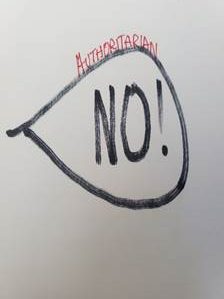
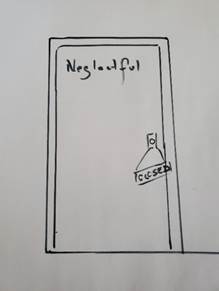
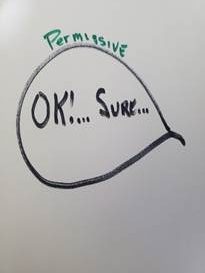
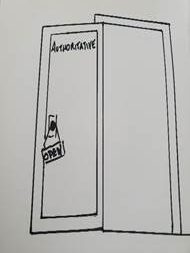
Accepting that responsibility as we understood it, how would our parenting be analyzed and what can be learned from our parenting journey? The analysis is based on the work of Diana Baumrind, a developmental psychologist who began her research in the 1960s, providing three of the basic parenting styles. In the 1980s, Stanford researchers, Eleanor Maccoby and John Martin added the fourth style.[xiii] These four styles are Authoritarian, Neglectful/Unengaged, Permissive and Authoritative. As is evident by the list of styles mentioned earlier, these four shots are only the ‘opening volleys across the bow’ of the discussion on parenting styles. Depending on how we come packaged into parenthood, in these times, we can choose to parent from a buffet of styles. An article in The Irish Times, which I accessed through my library’s online data offerings, provided a list of styles parents might choose: Helicopter, Drone, Lawn Mower/Bulldozer/Snow Plough, Free Range, Tiger, Dolphin, Koala, Jellyfish, Lighthouse, Gentle, Crunchy/Silky/Scrunchy, Concierge or as noted above, Conscious.[xiv] Seriously.
Howevvver, I am not going to fill my plate from that buffet. The 4 original styles will satisfy, with the following considerations brought forward by Jean Mercer. After reminding readers that the adoption process is stressful for many, but not all, children, she goes on to say “The effects of adoption depend on three highly significant factors that may be quite different for different adopted children: the child’s age at separation, the circumstances surrounding the adoption, and the care-giving abilities of the adoptive parents.”[xv] On with the analysis of our parenting styles.
As an appetizer/mood setter/ tension builder, I have included a little quiz I found and indulged in, based on the four parenting styles. If you are a tad curious for yourself you will find the quiz at this address: Practical Psychology “Parenting Style Quiz (Free Test + Instant Results)” Feb 1, 2024 https://practicalpie.com/parenting-style-quiz/
Please also note though before you do so that there is a caveat applicable in any curiosity: …. Human motives are always mixed and at least partly concealed, hence, endlessly arguable”.[xvi]
Our results: because both parents must be considered for their styles and input,[xvii] I appealed to the better angels of Dave’s nature, getting him to take the quiz just after I completed it. Maybe it was nearing suppertime and I was fogging over; whatever, I managed to add up the numbers each of us chose for each question instead of the number values given to each. And then I spent the next 24 hours angsting over the designations these numbers offered. One of us was borderline Neglectful and the other, Permissive. Maybe Permissive could be met with a bit of a shrug and giggle, but Neglectful? That one elicits, at the very least, a grimace and groan. I wanted to delete the quiz, shoving the results under the rug, but I also want to honestly explore our parenting. In the morning, I went back over the quiz looking for a way to ease it into my determination to be open and honest in my search and, whew. I saw my mistake and I recounted.
For some of the questions I was on the fence, thinking it depends on the situation, choosing the middle option, #3. And while Dave did not stay on the same fence for as many question responses as I, we came out with exactly the same scores, barely inside Warm in the first set and barely inside Demanding for the second set. Whew again! We managed to raise Yasik according to the nice sounding parenting style – Authoritative.
But I cannot ignore the impact of my emotional response to the three negative styles and what my image of myself and Dave would have had to acknowledge had we landed in any of these styles that are less than admirable and certainly not trending currently.
Add it all up and our parenting styles come from all that is swirling about in our brains, bodies and emotions, the parents who parented us, the times and the environment in which that parenting played out, and our values for, as is the habit of values, they take shape influenced by this mix of nature and nurture.
And we are off, skipping along the yellow brick road, off to ask the wizard what kind of parenting we provided for Yasik.
Footnotes
[i] Spock, Benjamin The Common Sense Book of Baby and Child Care Duell, Sloan and Pearce, 1957
[ii]https://en.wikipedia.org/wiki/There_are_unknown_unknowns
[iii] Season 33, Episode 2 of Saturday Night Live, which originally aired on October 6, 2007
[iv] Neufeld, Gordon, PH.D. and Gabor Maté, M.D. Hold On To Your Kids: why parents need to matter more than peers Vintage Canada, 2004, 5
[v] Simon, Scott Baby We Were Meant For Each Other: in praise of adoption Random house, 2010, 44-45
[vi] Perry, Bruce and Maia Szalavitz The Boy Who Was Raised As A Dog: and other stories from a child psychiatrist’s notebook. Basic Books, 2017, 89
[vii] Belsky, Jay, Avshalom Caspi, Terri E. Moffit, Richie Poulton. The Origins of You: how childhood shapes later life. Harvard University Press, 2020, 110.
[viii] Maté, Gabor MD and Daniel Maté The Myth of Normal: trauma, illness, and healing in a toxic culture. Knopf Canada, 2022, 160, 165
[ix] Belsky, Jay, Avshalom Caspi, Terri E. Moffit, Richie Poulton. The Origins of You: how childhood shapes later life. Harvard University Press, 2020, 110.
[x] Peterson, Jordan B. 12 Rules for Life: an antidote to chaos Random House Canada, 2018
[xi] Mercer, Jean. Understanding Attachment: parenting, child care and emotional development. Praeger Publishers, 2006, 74
[xii] Maté, Gabor with Daniel Maté. The Myth of Normal: trauma, illness & healing in a toxic culture. Knopf Canada, 2022, 179
[xiii] Kuppens, Sofie, Eva Ceulemans “Parenting Styles; a closer look at a well-known concept” J Child Fam Stud, 2018, Sep 18;28(1): 168-181 doi: 10.1007/s10826-018-1242-x https://pmc.ncbi.nlm.nih.gov/articles/PMC6323136/
[xiv] The Irish Times “Helicopter? Free-range? Concierge? What kind of parent are you? How do you parent? There’s a meme for that amid the modern obsession with dissecting and defining parenting styles” July 18, 2023 https://www.irishtimes.com/health/your-family/2023/07/18/helicopter-free-range-concierge-what-kind-of-parent-are-you/
[xv] Mercer, Jean. Thinking Critically about Child Development: examining myths & misunderstanding. Praeger Publishers, 2016, 246
[xvi] Alexander, Bruce K. The Globalization of Addiction: a study in poverty of the spirit. 2008, p. 154
[xvii] Francis, Richard C. Epigenetics: the ultimate mystery of inheritance. WW Norton, 2011, 72-73
[i] Spock, Benjamin The Common Sense Book of Baby and Child Care Duell, Sloan and Pearce, 1957
[ii]https://en.wikipedia.org/wiki/There_are_unknown_unknowns
[iii] Season 33, Episode 2 of Saturday Night Live, which originally aired on October 6, 2007
[iv] Neufeld, Gordon, PH.D. and Gabor Maté, M.D. Hold On To Your Kids: why parents need to matter more than peers Vintage Canada, 2004, 5
[v] Simon, Scott Baby We Were Meant For Each Other: in praise of adoption Random house, 2010, 44-45
[vi] Perry, Bruce and Maia Szalavitz The Boy Who Was Raised As A Dog: and other stories from a child psychiatrist’s notebook. Basic Books, 2017, 89
[vii] Belsky, Jay, Avshalom Caspi, Terri E. Moffit, Richie Poulton. The Origins of You: how childhood shapes later life. Harvard University Press, 2020, 110.
[viii] Maté, Gabor MD and Daniel Maté The Myth of Normal: trauma, illness, and healing in a toxic culture. Knopf Canada, 2022, 160, 165
[ix] Belsky, Jay, Avshalom Caspi, Terri E. Moffit, Richie Poulton. The Origins of You: how childhood shapes later life. Harvard University Press, 2020, 110.
[x] Peterson, Jordan B. 12 Rules for Life: an antidote to chaos Random House Canada, 2018
[xi] Mercer, Jean. Understanding Attachment: parenting, child care and emotional development. Praeger Publishers, 2006, 74
[xii] Maté, Gabor with Daniel Maté. The Myth of Normal: trauma, illness & healing in a toxic culture. Knopf Canada, 2022, 179
[xiii] Kuppens, Sofie, Eva Ceulemans “Parenting Styles; a closer look at a well-known concept” J Child Fam Stud, 2018, Sep 18;28(1): 168-181 doi: 10.1007/s10826-018-1242-x https://pmc.ncbi.nlm.nih.gov/articles/PMC6323136/
[xiv] The Irish Times “Helicopter? Free-range? Concierge? What kind of parent are you? How do you parent? There’s a meme for that amid the modern obsession with dissecting and defining parenting styles” July 18, 2023 https://www.irishtimes.com/health/your-family/2023/07/18/helicopter-free-range-concierge-what-kind-of-parent-are-you/
[xv] Mercer, Jean. Thinking Critically about Child Development: examining myths & misunderstanding. Praeger Publishers, 2016, 246
[xvi] Alexander, Bruce K. The Globalization of Addiction: a study in poverty of the spirit. 2008, p. 154
[xvii] Francis, Richard C. Epigenetics: the ultimate mystery of inheritance. WW Norton, 2011, 72-73
Leave a Reply